

When you consider abstract paintings, you might find yourself questioning what truly defines this art form. It moves beyond traditional representation, instead channeling emotions and ideas through color and form. As you explore various styles like Abstract Expressionism or Geometric Abstraction, you’ll notice how different techniques can evoke distinct feelings and interpretations. Each brushstroke and layer adds complexity, inviting you to engage more deeply. But what happens when you confront a piece that seems to defy your understanding?
Definition of Abstract Art
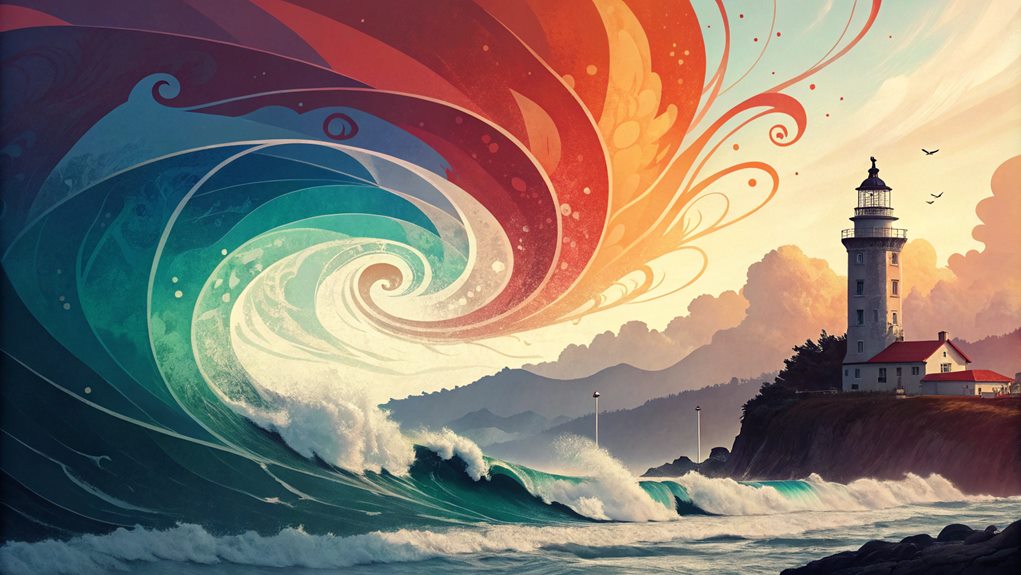
Abstract art’s essence lies in its departure from traditional representation. Instead of depicting objects or scenes as they appear in reality, abstract art focuses on colors, shapes, forms, and gestural marks. It invites you to engage with the artwork on an emotional and intellectual level, often prompting personal interpretations. You won’t find clear subjects; rather, you’ll encounter a visual language that communicates feelings and concepts through non-representational means.
In abstract art, you can explore the interplay of color and line, discovering how these elements evoke mood and provoke thought. The absence of recognizable forms encourages you to let go of preconceived notions and immerse yourself in the experience of the artwork. This freedom allows for a diverse range of expression—each artist brings their unique perspective, resulting in works that can be bold, chaotic, serene, or minimalist.
Embracing abstract art means embracing ambiguity and complexity. It challenges you to see beyond the surface and to find meaning in the unexpected. By engaging with these works, you open yourself up to new ways of seeing and understanding the world around you.
Historical Context
To understand abstract art, you need to look at its origins and the key artists who shaped its development. This movement emerged in the early 20th century, breaking away from traditional forms and exploring new ways of expression. Artists like Wassily Kandinsky and Piet Mondrian played pivotal roles in this transformation, pushing boundaries and inspiring future generations.
Origin of Abstract Art
The emergence of abstract art in the early 20th century marked a radical shift in the art world, challenging traditional notions of representation and form. You’ll find that this movement arose from various cultural and intellectual currents, including the rise of modernism, the impact of industrialization, and the questioning of reality itself. Artists began to investigate new ways to express emotion, ideas, and experiences, rather than merely replicating the visual world around them.
As you explore deeper, you’ll notice that influences from movements like Impressionism and Cubism paved the way for abstraction. These artists experimented with color, shape, and perspective, setting the stage for a more liberated approach to art. The turmoil of World War I also played a significant role, as artists sought to convey the chaos and disillusionment of their times.
You might appreciate how the rejection of realism allowed for greater personal expression, inviting viewers to interpret art on an emotional and intellectual level. This shift laid the groundwork for various styles and philosophies that would emerge, making abstract art a pivotal development in the history of creativity.
Key Influential Artists
Throughout the development of abstract art, several key artists emerged, each contributing uniquely to the movement’s evolution. You can’t discuss abstract art without mentioning Wassily Kandinsky, often considered the pioneer of abstraction. His belief that art should express emotions led him to create vibrant, geometric compositions that broke away from traditional representation.
Next, you’ll want to explore Piet Mondrian, whose minimalist approach and use of primary colors established a new visual language. His grid-like structures reflect a quest for harmony and order, influencing countless artists and movements that followed.
Don’t overlook Jackson Pollock, known for his drip paintings that epitomize the action painting style. His radical techniques emphasized the process of creation, transforming how you perceive the relationship between artist and artwork.
Finally, consider Mark Rothko, who sought to evoke deep emotional responses through color. His large canvases invite viewers to immerse themselves, showcasing the power of color as a means of expression.
These artists not only shaped abstract art but also redefined the boundaries of creativity, encouraging you to explore and appreciate diverse interpretations within this vibrant movement.
Key Concepts in Abstract Painting
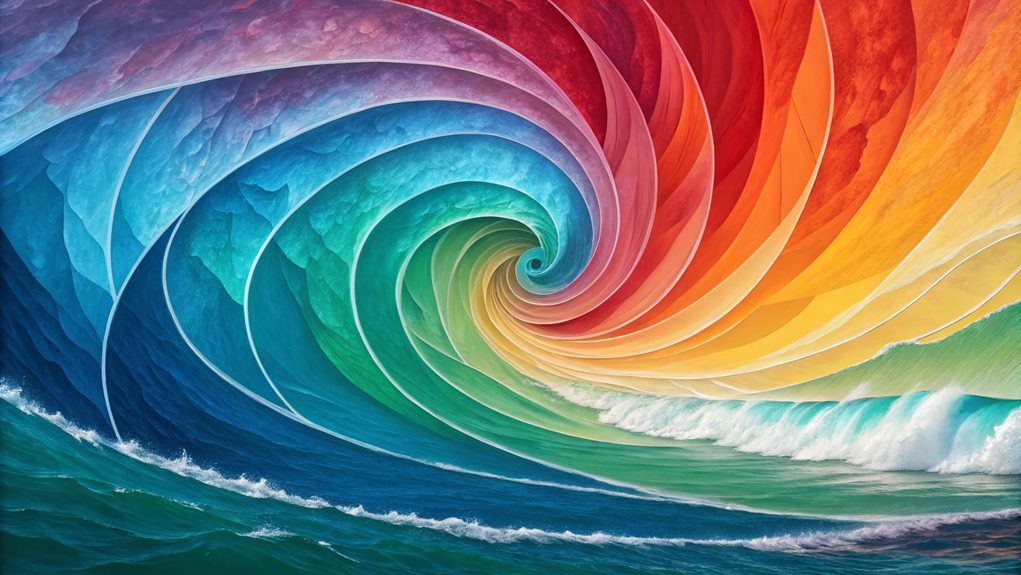
At its core, abstract painting revolves around the expression of emotions and ideas rather than the depiction of recognizable subjects. This approach invites you to explore a world of color, form, and texture where meaning often transcends the literal. One key concept is the use of color to evoke feelings. You can manipulate hues and shades to create moods—from vibrant reds that spark energy to calming blues that instill serenity.
Another concept is the emphasis on process over product. Many artists engage in spontaneous, intuitive practices, allowing their emotional states to guide their brushstrokes. This freedom can lead to surprising results, encouraging you to embrace unpredictability in your own creations.
Additionally, abstraction often employs symbolism. Shapes and lines may represent various ideas or emotions, allowing you to convey complex narratives without relying on identifiable imagery. This offers a unique opportunity for personal interpretation, as viewers like you can draw your own conclusions about the artwork’s meaning.
Ultimately, abstract painting challenges you to step outside traditional boundaries, inviting you to connect with your feelings and thoughts in a profound, unfiltered way.
Major Styles of Abstract Art
While exploring the domain of abstract art, you’ll encounter several major styles that each offer a distinct approach to expression. One popular style is Abstract Expressionism, which emphasizes spontaneous, emotional brushwork and the artist’s inner feelings. You might appreciate the raw energy and bold colors that characterize this movement.
Another significant style is Geometric Abstraction, where shapes and forms take center stage. You’ll notice how artists use lines, curves, and angles to create a sense of order and harmony, often relying on mathematical precision.
Then there’s Color Field Painting, which focuses on large areas of color rather than intricate details. You might find it calming and meditative as artists explore the emotional impact of color itself.
Finally, consider Minimalism, where simplicity reigns. In this style, artists strip away the unnecessary, creating works that often feature monochromatic palettes and straightforward forms. It invites you to engage with the essence of art itself.
These major styles showcase the diversity within abstract art, allowing you to connect with different emotions and ideas while exploring the canvas. Each style challenges your perception and invites new interpretations, enriching your artistic journey.
Techniques Used in Abstract Painting
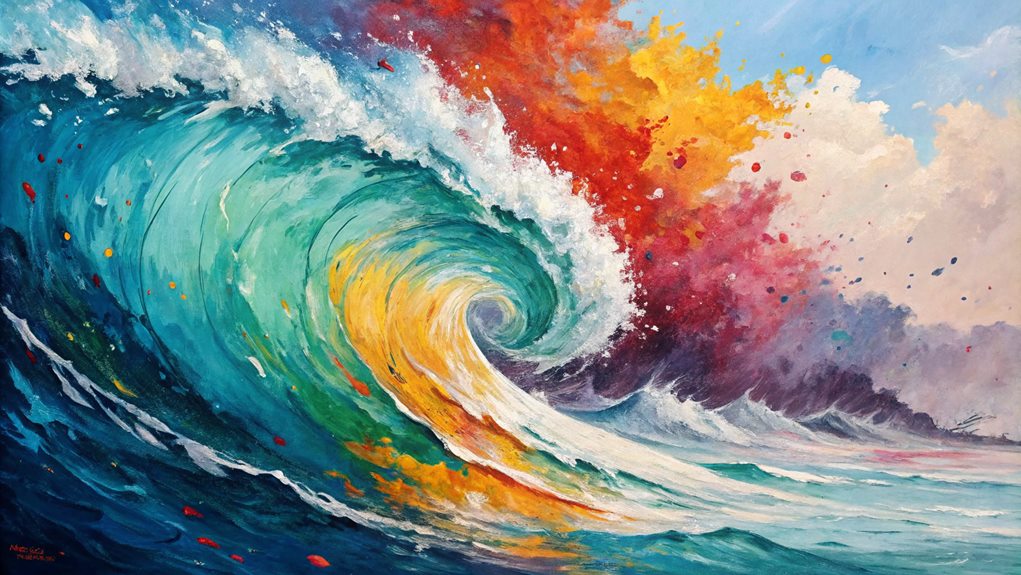
When diving into abstract painting, you’ll encounter a variety of techniques that artists employ to convey their vision. One of the most popular methods is layering, where you build depth and complexity by applying multiple coats of paint. This technique can create rich textures and vibrant colors that draw the viewer in.
Another technique is the use of bold brush strokes. With quick and expressive movements, you can evoke emotion and energy in your work. Don’t be afraid to experiment with different brush sizes and shapes for varied effects.
You might also explore pouring and dripping techniques, where paint is allowed to flow freely, creating organic shapes and patterns. This method can lead to unexpected results, adding an element of surprise to your painting.
Additionally, consider the use of mixed media. Combining traditional paint with materials like collage, fabric, or paper can enhance your composition and introduce new textures.
Lastly, don’t underestimate the power of color theory. Understanding how colors interact can help you create a harmonious or striking contrast in your artwork. Embrace these techniques, and let your creativity take the lead!
Influential Abstract Artists
Abstract art has been shaped by countless visionary artists who pushed the boundaries of creativity. When you immerse yourself in this world, you’ll discover some key figures whose influence resonates through their innovative approaches and unique styles.
- Wassily Kandinsky: Often regarded as the pioneer of abstract art, his work emphasizes color and form’s emotional power.
- Piet Mondrian: Known for his geometric compositions, he believed in reducing art to its essentials, using primary colors and grid-like arrangements.
- Jackson Pollock: His drip paintings revolutionized the art scene, showcasing the dynamic energy of movement and spontaneity.
- Mark Rothko: His large color fields evoke deep contemplation, highlighting the relationship between viewer and canvas.
- Kazimir Malevich: With his Suprematist works, he stripped art down to basic shapes, focusing on the pure experience of color.
These artists not only transformed how we perceive art but also inspired countless others to explore abstraction’s vast possibilities. Their legacies continue to challenge your perceptions and inspire new generations of artists.
Emotional Impact of Abstract Art
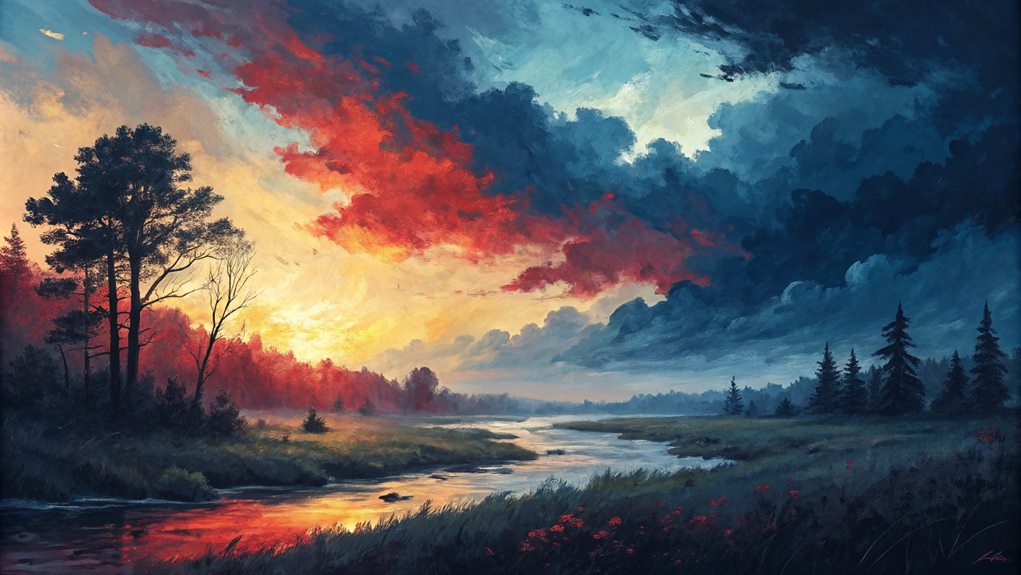
The emotional impact of abstract art can be profound, as it invites you to engage with your feelings in a unique way. Unlike realistic art, which often tells a specific story, abstract art relies on color, shape, and form to evoke emotions. When you stand before an abstract painting, you may find yourself interpreting it through your own experiences, allowing personal feelings to surface.
You might feel exhilaration from vibrant colors or melancholy from darker tones. This connection can be immediate and visceral, prompting a reaction that’s deeply personal. The ambiguity of abstract art encourages you to explore your emotions without the constraints of narrative, making each experience distinct.
Moreover, abstract art can stimulate a sense of curiosity, pushing you to question what you see and how it resonates with you. You might discover hidden layers within the work, reflecting your own inner thoughts or struggles. Ultimately, the emotional impact of abstract art lies in its ability to foster a dialogue between the artwork and your psyche, creating an intimate space for reflection and connection that’s unlike any other form of expression.
The Future of Abstract Painting
As you reflect on the emotional impact of abstract art, consider how its evolution continues to shape the future of this genre. With the rise of technology and new artistic mediums, abstract painting is entering an exciting phase. You’ll see artists blending traditional techniques with digital tools, creating innovative works that challenge perceptions.
The future of abstract painting promises:
- Incorporation of Virtual Reality: Artists are using VR to create immersive abstract experiences.
- Sustainable Materials: Eco-friendly practices are becoming a priority, influencing both creation and consumption.
- Interactive Art: Expect pieces that invite viewer participation, making you a part of the artwork.
- Global Influences: Diverse cultural perspectives will enrich the abstract landscape, expanding its boundaries.
- AI Collaborations: Artificial intelligence is being explored as a tool for generating new forms and styles.
As these trends unfold, you’ll find that abstract painting remains a vibrant and dynamic form of expression. It’s an affirmation of the human experience, forever evolving while inviting you to engage with its rich emotional tapestry. The future is bright, and your connection to this art form can only deepen.
Read The Next Blog Post –
To sum up, abstract painting invites you to explore emotions and ideas beyond the surface. As the saying goes, “Beauty is in the eye of the beholder.” Your unique perspective shapes the experience, revealing the depth and complexity of these vibrant artworks. With each brushstroke, you’re encouraged to connect personally, making the world of abstract art a boundless journey of discovery and expression. Embrace the chaos, and let your imagination lead the way!