

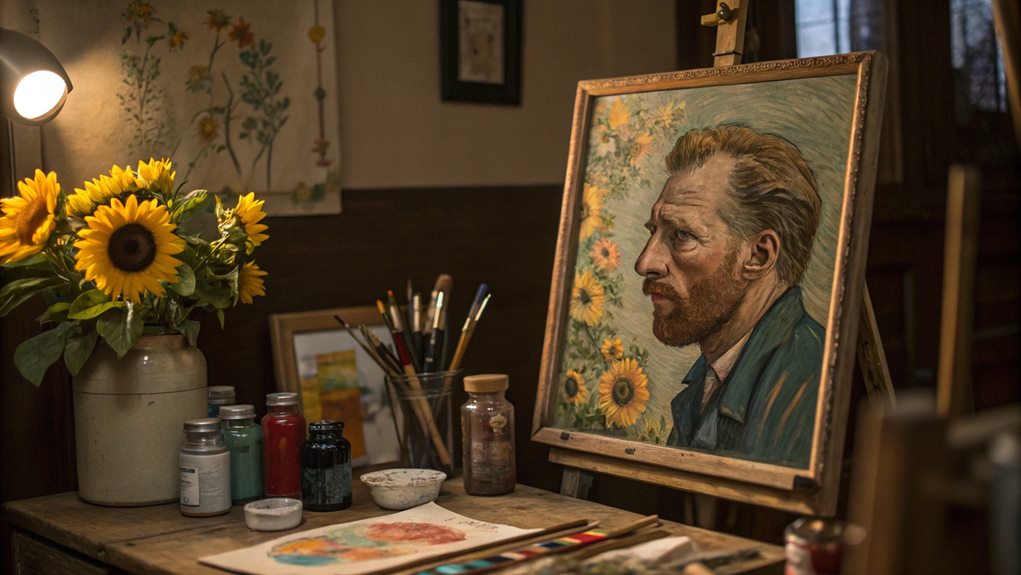
You're faced with the brilliance of Vincent Van Gogh's art, yet it's shadowed by the darkness of his troubled life. His vibrant brushstrokes tell stories of both beauty and despair, inviting you to reflect on how his struggles with mental illness fueled his creativity. As you explore the complexities of his existence, you might wonder how such profound pain can coexist with artistic genius. What drove him to create despite his suffering, and how does his legacy challenge our understanding of creativity today?
Early Life and Background
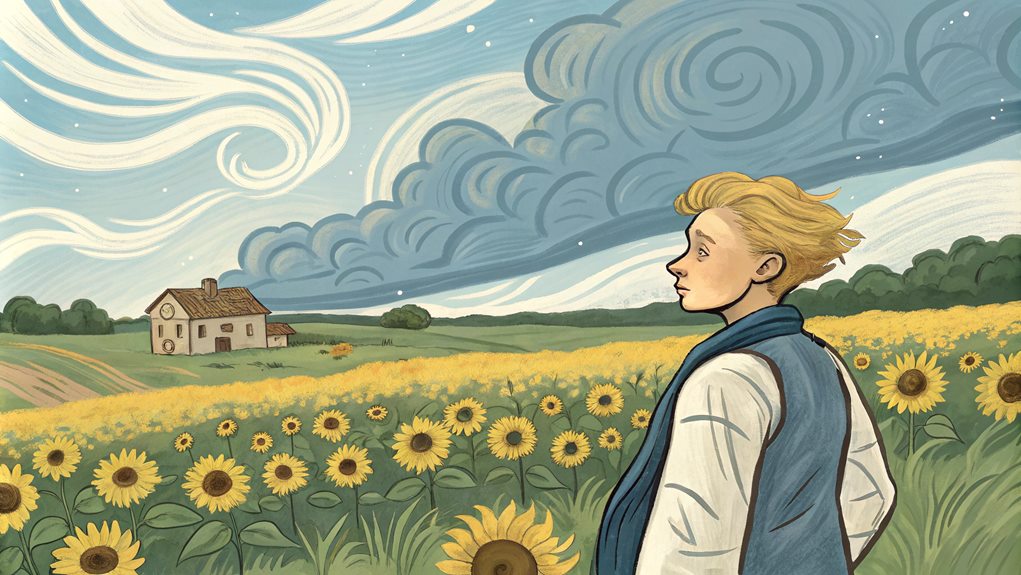
Vincent Van Gogh's early life was marked by both turmoil and creativity, shaping the artist he would become. Born on March 30, 1853, in the Netherlands, you'll find that he grew up in a religious and artistic family. His father was a minister, and his mother had a passion for painting, which influenced Vincent's early interest in art. However, his life wasn't all about art; it was filled with struggles. You might notice that he faced emotional instability and a sense of isolation from a young age.
After several failed attempts at various careers, including working for an art dealership and as a teacher, he devoted himself to art in his late twenties. His financial instability, coupled with his intense personality, meant that he often battled feelings of inadequacy and loneliness. You can see how these challenges fueled his creativity. Despite these hardships, he formed strong connections with his brother Theo, who supported his ambitions. This bond became a lifeline for Vincent, providing both emotional and financial stability as he commenced on his journey as an artist, ultimately leading to his legacy as one of the most renowned painters in history.
Artistic Development and Style
As Vincent embraced his artistic journey, his style began to evolve dramatically, reflecting both his emotional experiences and the influences around him. Initially, you'll notice his early works, like "The Potato Eaters," showcasing a dark palette and a focus on peasant life. This realism reveals his empathy and connection to the working class. However, as time went on, his palette lightened, and he began experimenting with color and brushwork.
You can't overlook the impact of Impressionism, which inspired him to explore the effects of light and movement. His time in Paris introduced him to a vibrant community of artists, and you can see how he adopted brighter colors and bold strokes in pieces like "Sunflowers." By the time he painted "Starry Night," his style had transformed into swirling forms and vivid contrasts, representing his unique perspective on the world.
Ultimately, Vincent's artistic evolution reflects both his personal journey and the artistic currents of his time. You can appreciate how he synthesized these elements into a distinctive style that continues to resonate with viewers today, highlighting the genius behind his tragic story.
Struggles With Mental Health
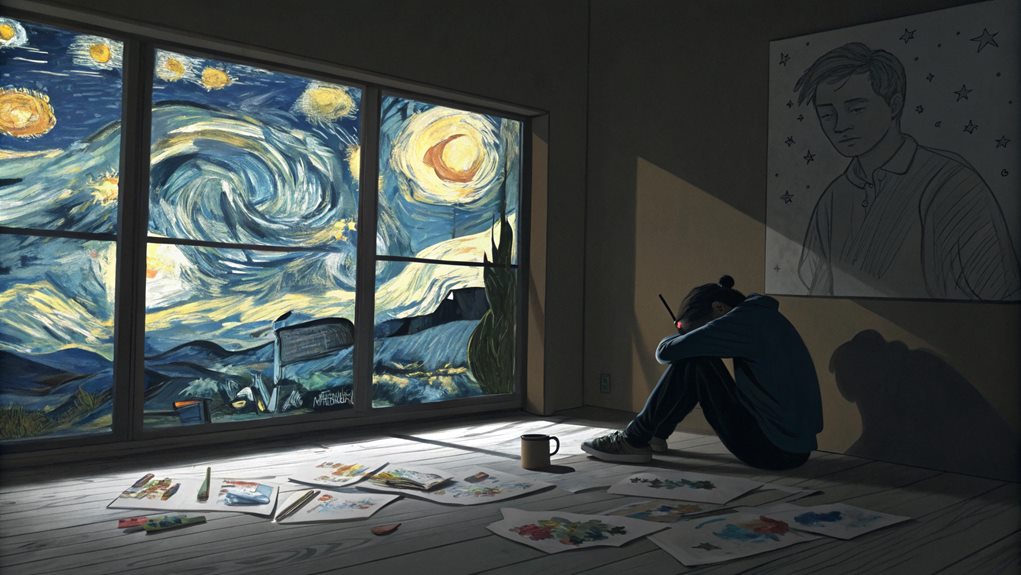
Vincent Van Gogh's struggles with mental health began early in his life, showing signs of distress that would later shape his artistry. You'll see how his emotional turmoil influenced his work, creating pieces that resonate with deep feelings. This legacy of mental illness adds another layer to understanding his genius and the complexities of his life.
Early Signs of Distress
Struggling with his mental health from a young age, Van Gogh exhibited early signs of distress that would haunt him throughout his life. You can see glimpses of his inner turmoil in his letters and accounts from those who knew him. From childhood, he faced isolation, which led to feelings of loneliness that persisted into adulthood. His tumultuous relationships with family and friends exacerbated his emotional struggles, pushing him further into despair.
He often felt disconnected from the world around him, struggling to form deep connections. This sense of alienation manifested in periods of intense anxiety and depression. You might notice how these feelings seeped into his life choices, including his decision to leave the family home and pursue a career in art, hoping it would provide solace.
His early years were marked by instability, and you can trace the roots of his later breakdowns back to these formative experiences. As you explore deeper into his life, it becomes clear that these early signs of distress set the stage for the profound struggles he would face while maneuvering both his mental health and his artistic journey.
Influence on Artistry
Through the lens of his mental health struggles, Van Gogh's artistry transformed into a powerful expression of his inner chaos. You can see this shift in his use of color and brushwork, where vibrant hues clash with erratic strokes, mirroring his turbulent emotions. Each painting becomes a window into his psyche, revealing his despair, passion, and longing for connection.
As you explore his works, you might notice how his struggles led him to experiment with different styles and techniques. The swirling skies of "Starry Night" resonate with a sense of movement and unease, capturing the restlessness that often plagued him. His portraits, like "Self-Portrait with Bandaged Ear," reflect not just his physical pain but also his emotional turmoil, inviting you to empathize with his plight.
Van Gogh's mental health challenges drove him to create art that was raw and honest. His experiences shaped his perspective, allowing you to witness the world through his eyes, where beauty and agony coexist. This unique lens not only defined his artistry but also left an indelible mark on the art world, influencing generations of artists to come.
Legacy of Mental Illness
The impact of Van Gogh's mental health struggles extends far beyond his own life, shaping the way society views mental illness in the context of creativity. When you ponder Van Gogh, you can't ignore the connection between his turbulent mind and his extraordinary art. His battles with depression, anxiety, and psychosis fueled a unique perspective that many artists still endeavor to capture today.
You might find it striking how his struggles resonate with the ongoing conversation about mental health in creative fields. People often romanticize the idea of the "tortured artist," but Van Gogh's story highlights the real pain and suffering behind that label. His work challenges you to reflect on the fine line between brilliance and despair; it's a reminder that creativity can emerge from turmoil.
Moreover, Van Gogh's legacy has inspired countless discussions around mental health awareness and support. His life serves as a call to action, encouraging society to approach mental illness with empathy rather than stigma. As you contemplate his impact, remember that acknowledging mental health struggles can lead to greater understanding and acceptance, allowing future generations to create freely and authentically.
Key Influences and Relationships
Vincent Van Gogh's artistic journey was profoundly shaped by key influences and relationships that enriched his work and fueled his passion. You'll notice how these connections not only inspired his creativity but also provided a sense of purpose in his tumultuous life.
- Theo Van Gogh: Vincent's younger brother, Theo, played a vital role as his confidant and financial supporter. Their letters reveal a deep bond, showcasing Theo's unwavering belief in Vincent's talent.
- Paul Gauguin: The time spent with Gauguin in Arles marked a significant turning point. Their contrasting styles sparked intense debates and pushed Vincent to explore new artistic directions, even as their relationship became strained.
- The Impressionists: The influence of the Impressionist movement opened Vincent's eyes to color and light. Artists like Camille Pissarro and Claude Monet inspired him to experiment with bold colors and dynamic brushwork, ultimately shaping his unique style.
These influences and relationships not only enriched Vincent's work but also provided a canvas for his complex emotions, making his journey as compelling as the art he created.
Major Works and Their Significance
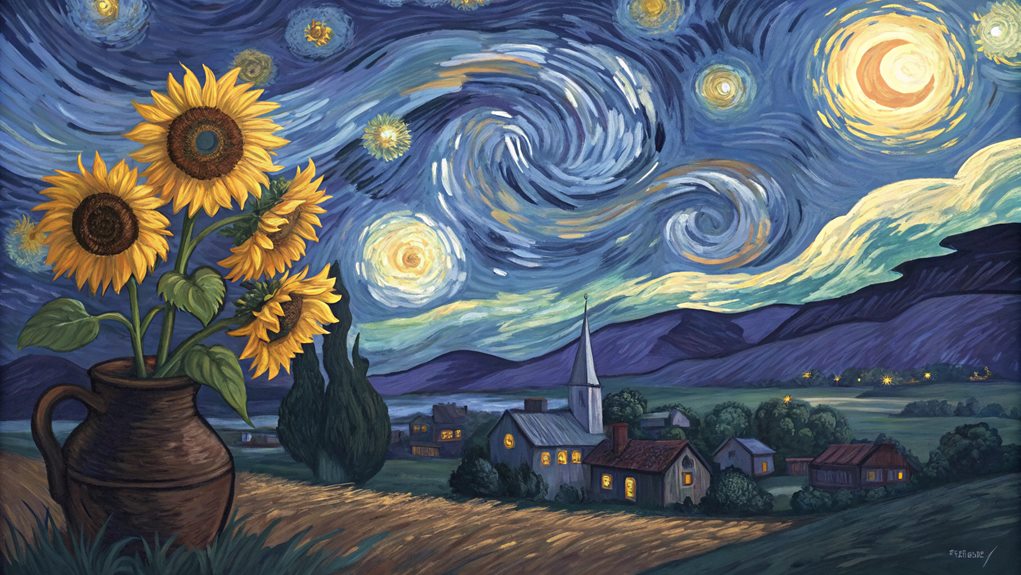
Many of Van Gogh's major works not only showcase his distinctive style but also reflect his emotional state and the struggles he faced throughout his life. Take "Starry Night," for example. The swirling skies and vibrant colors convey a sense of turmoil, capturing both beauty and chaos. You can feel the intensity of his emotions as he painted from the asylum in Saint-Rémy-de-Provence.
Another notable piece is "The Bedroom," where the bold colors and distorted perspective illustrate his desire for comfort and stability amidst personal chaos. When you look at "Sunflowers," you see how he transformed simple subjects into symbols of hope and warmth, using vivid yellows that evoke joy despite his inner battles.
In "Irises," the delicate brushwork and vibrant hues reflect his fascination with nature, showcasing his ability to find beauty even in his darkest moments. Each work invites you to connect with Van Gogh's experience and perception of the world, revealing the depth of his genius. By engaging with these masterpieces, you not only appreciate the artistry but also gain insight into the profound emotional currents that shaped his life and legacy.
Life in Arles and the Yellow House
In the vibrant atmosphere of Arles, where the sun shines brightly and colors seem to come alive, Van Gogh dreamed of creating an artistic community. He envisioned a place where creativity flourished, a haven for fellow artists to collaborate and inspire one another. The Yellow House, his residence, became the heart of this dream.
As you step into this iconic space, imagine:
- Sunflower Fields: Golden blooms sway gently in the breeze, their vibrant yellows echoing Van Gogh's own palette, capturing the essence of his passion.
- Starry Nights: The night sky, filled with swirling stars, invites you to experience the beauty that influenced his most famous works, transporting you to a domain of wonder.
- Café Terrace: A lively spot, where locals gather, laughter mingles with the clinking of glasses, and you can almost hear the conversations that sparked his creativity.
During his time in Arles, Van Gogh poured his heart into his art, but the isolation and pressure also took their toll. This period was both a sanctuary and a battleground, shaping the genius he was destined to be.
Posthumous Recognition and Impact
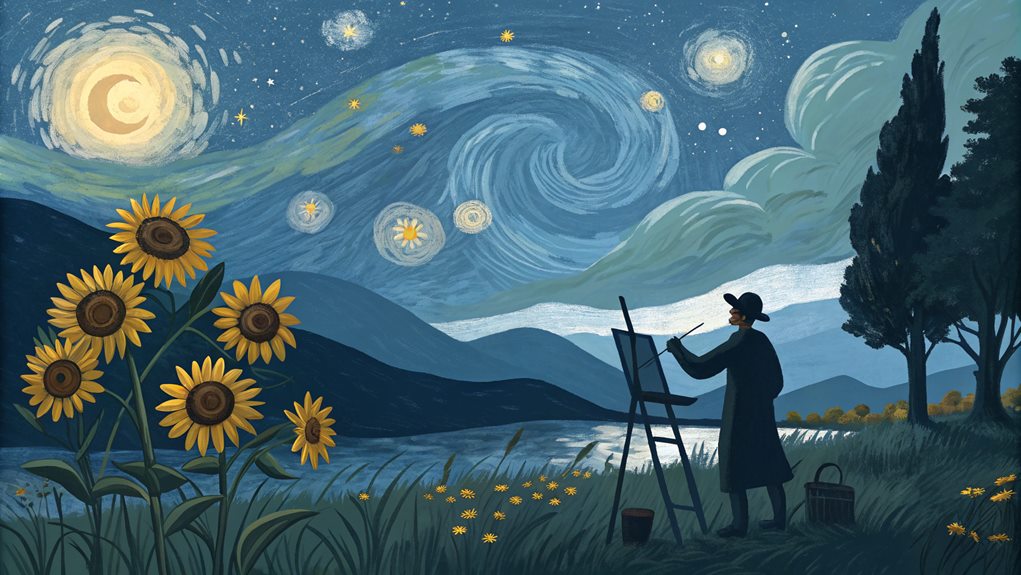
After his tragic death in 1890, Van Gogh's artistry began to gain the recognition it so desperately deserved. At first, his work didn't attract much attention, but slowly, art enthusiasts and critics started to appreciate his bold colors and emotional depth. You might find it fascinating that his brother, Theo, played a significant role in promoting his art posthumously, showcasing his paintings and letters to the public.
By the early 20th century, exhibitions featuring Van Gogh's work emerged, capturing the interest of a growing audience. His unique style influenced a wave of artists, and you can see his impact in the development of Expressionism and Post-Impressionism. People began to see beyond his troubled life and instead focused on the brilliance of his work, finding beauty in his struggles.
As you explore art history, you'll notice how Van Gogh's paintings, such as "Starry Night" and "Sunflowers," became iconic symbols of the emotional power of art. His posthumous recognition transformed him into a cultural icon, showing how a tragic life can lead to profound artistic impact. Van Gogh's journey reminds you that sometimes, genius isn't recognized until it's too late.
Legacy of a Tragic Genius
Vincent Van Gogh's legacy goes far beyond his breathtaking paintings; it shapes the way we view art and mental health today. You'll see how his struggles with mental illness influenced his work, creating a deep connection between artist and viewer. His posthumous fame reminds us that genius often comes with a price, yet leaves an indelible mark on the world.
Artistic Influence and Impact
The legacy of Vincent Van Gogh continues to resonate through the art world, influencing generations of artists who seek to express raw emotion and bold color in their work. His innovative techniques and unique vision paved the way for modern art movements, inspiring you to explore new boundaries in your own creations.
You can see Van Gogh's impact in various ways:
- Vibrant Color Palette: His use of intense, contrasting colors encourages you to embrace boldness and creativity in your artwork.
- Expressive Brushwork: The dynamic strokes in his paintings inspire you to convey emotion and movement, inviting viewers into your artistic narrative.
- Subjective Reality: Van Gogh's ability to depict his perspective of the world motivates you to infuse your personal experiences into your art, making it a reflection of your inner life.
As you investigate deeper into your artistic journey, remember that Van Gogh's spirit lives on. His passion and dedication remind you that art is not just about technique but also about the heart and soul poured into every piece. Embrace that influence, and let it guide you in your own creative expression.
Mental Health Struggles
Many artists experience mental health struggles, and Vincent Van Gogh's life is a poignant example of this reality. You can't help but notice how his emotional turmoil permeates his art. With a lifelong battle against depression, anxiety, and episodes of psychosis, Van Gogh's internal chaos often found its way onto the canvas. His paintings, vibrant yet haunting, reflect his deep-seated pain and longing for connection.
You might find it striking that despite his undeniable talent, the world often overlooked his struggles during his lifetime. Van Gogh faced isolation, and his mental health deteriorated, leading to self-destructive behavior. The infamous incident where he severed his own ear showcases the depths of his despair, leaving you to ponder the immense pressure he felt as an artist.
Understanding Van Gogh's mental health struggles enriches your appreciation of his work. Each brushstroke tells a story of anguish, yet also of resilience. He poured his emotional battles into his art, creating masterpieces that resonate with many today. By acknowledging his struggles, you can see Van Gogh not just as a tragic genius, but as a deeply human individual maneuvering the complexities of life through his extraordinary creativity.
Posthumous Recognition and Fame
After his tragic death in 1890, Vincent Van Gogh's work slowly began to gain the recognition it deserved, transforming him from a misunderstood artist to a celebrated genius. You can see the impact of his legacy in various ways, as his paintings now hang in prestigious galleries worldwide, enchanting millions. It's fascinating to think about how his art evokes emotions and inspires creativity.
Imagine standing in a gallery, surrounded by:
- Starry Night: The swirling night sky mesmerizes your gaze, igniting feelings of wonder and introspection.
- Sunflowers: The vibrant yellows and rich textures radiate warmth, reminding you of the beauty in everyday life.
- The Bedroom: The intimate setting invites you to step into Van Gogh's world, where simplicity meets profound emotion.
These masterpieces not only showcase his exceptional talent but also reflect his tumultuous life. As you explore his posthumous fame, it's clear that Van Gogh's struggles have become part of his narrative, adding depth to his art. Today, his work continues to resonate, reminding us of the fragile connection between genius and tragedy. His legacy endures, inspiring countless artists and admirers alike.
Read The Next Blog Post –
In the swirling skies of "The Starry Night," you see Vincent's struggles painted in vibrant blues and yellows, a reflection of his turbulent soul. Despite the shadows of his life, his art bursts forth like sunlight through storm clouds, inviting you to feel every brushstroke of joy and sorrow. His legacy isn't just in the masterpieces but in the way he challenges you to embrace the beauty in chaos, reminding you that even tragedy can spark creativity.