

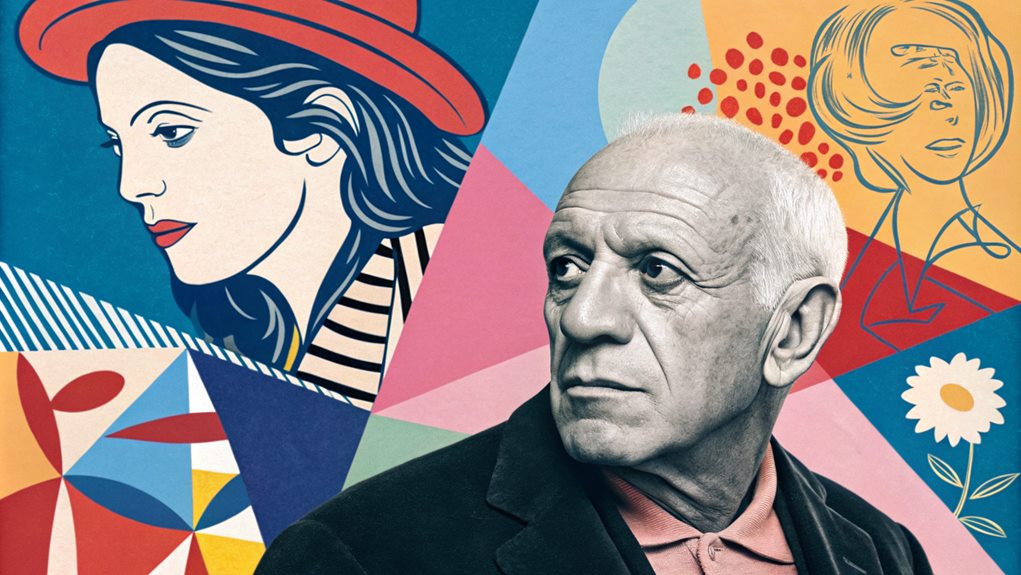
Picasso's vibrant brushstrokes often clash with the somber tones of his early work, highlighting the complexity of his artistic journey. You might find it intriguing how he shifted from the melancholic Blue Period to the lively Rose Period, only to co-found Cubism, a movement that shattered traditional perspectives. Each phase reveals not just the evolution of his style, but also the broader cultural shifts of his time. What drove this relentless pursuit of innovation, and how did it shape not only his legacy but the art world as a whole?
Early Influences on Picasso
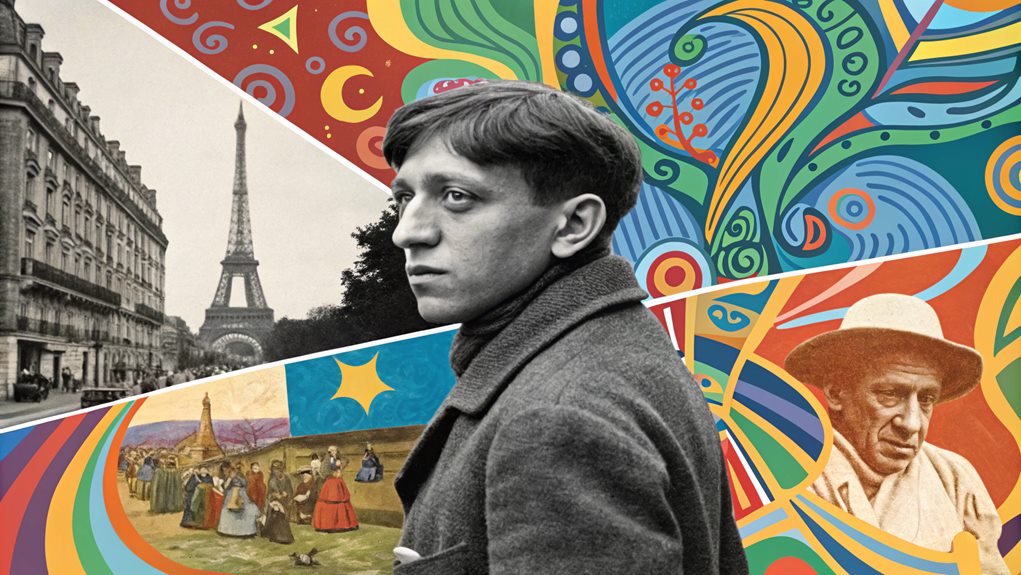
Pablo Picasso's early influences shaped his artistic journey in profound ways. Growing up in Málaga, you can see how his father, an art teacher, ignited his passion for painting. With your father's guidance, you'd likely explore various techniques and styles, immersing yourself in the world of art from a young age. His family moved to Barcelona, where you'd encounter a thriving art scene that expanded your horizons.
You'd find yourself drawn to the works of Spanish masters like El Greco and Diego Velázquez. Their dramatic use of light and shadow would inspire you to experiment with depth and emotion in your own pieces. Additionally, the Symbolist movement would capture your imagination, encouraging you to infuse personal meaning and symbolism into your work.
In your early teens, you'd be influenced by the vibrant colors and forms of modernist artists, which would begin to shape your unique style. This eclectic mix of influences would create a foundation for your revolutionary approach to art, pushing you to break boundaries as you evolve into one of the most significant figures of the 20th century. Your journey is a reflection of how early experiences can mold an artist's vision.
The Blue Period
As Picasso's artistic journey evolved, he entered a profound phase known as the Blue Period, lasting from 1901 to 1904. During this time, you'll notice his palette turned mainly to shades of blue, reflecting deep emotional themes and experiences. This shift came after the tragic suicide of his close friend, which profoundly impacted his perspective on life and art.
You're drawn into the somber world Picasso created, where themes of poverty, isolation, and despair prevail. His subjects often included the downtrodden—beggars, the blind, and the melancholic, each portrayed with haunting beauty. You can feel the weight of their struggles through his brushstrokes and color choices.
In this period, you might encounter iconic works like "The Old Guitarist" and "La Vie," which encapsulate the sorrowful essence of this phase. Picasso's ability to convey emotion through his art during the Blue Period is striking. It's a reflection of his evolving understanding of human experience. As you explore this phase, you'll gain insight into how personal loss and societal issues shaped his artistic expression, laying the groundwork for the revolutionary changes that would follow in his career.
The Rose Period
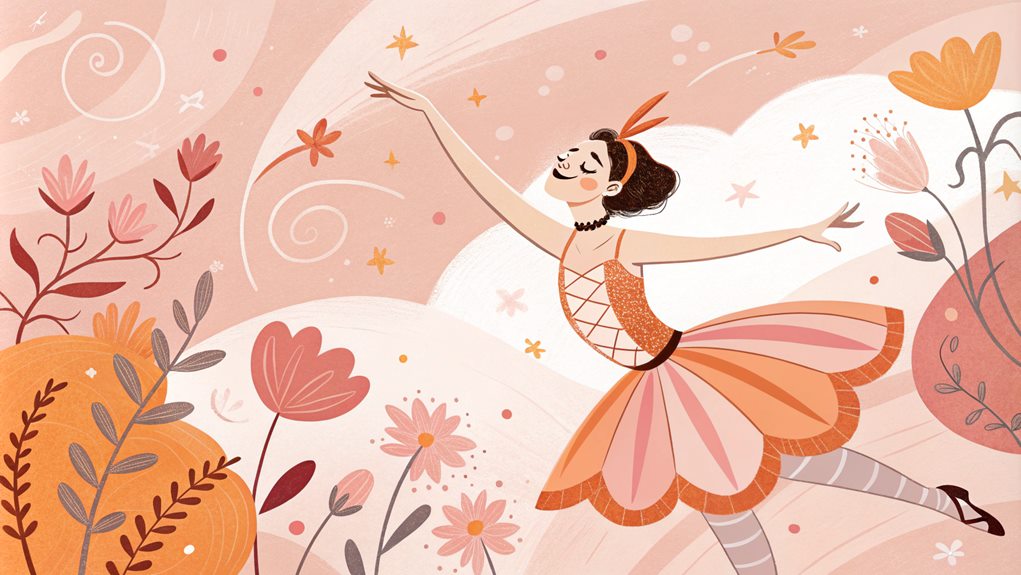
Shifting from the depths of the Blue Period, Picasso entered the vibrant Rose Period between 1904 and 1906. During this time, you'd notice a significant shift in his palette and subject matter. The somber blues gave way to warm hues of pink, orange, and red, reflecting a newfound sense of hope and joy.
In this phase, Picasso often depicted circus performers, harlequins, and acrobats, imbuing them with a sense of emotional depth and whimsy. You can see how he captured their grace and vulnerability, creating a connection between the viewer and the subjects. The figures became more rounded and less angular, showcasing a softer, more human approach.
As you explore this period, you'll also observe Picasso's growing interest in the themes of love and companionship. The relationships between characters in his works convey intimacy and tenderness. This exploration of human connection marks a pivotal transformation in his artistic journey.
Co-founding Cubism
While Picasso was exploring the emotional nuances of the Rose Period, he began to co-found Cubism, a revolutionary art movement that would forever change the landscape of modern art. Alongside Georges Braque, Picasso sought to break away from traditional representation, embracing fragmented forms and multiple perspectives. This innovative approach allowed artists to convey complex realities in a way that resonated deeply with the dynamic world around them.
As you investigate Cubism, you'll notice:
- Geometric Shapes: Objects are deconstructed into basic shapes, transforming the familiar into the abstract.
- Multiple Viewpoints: Instead of a single perspective, you'll see various angles represented simultaneously, creating a sense of depth and movement.
- Limited Color Palette: Early Cubism often employed muted tones, emphasizing form over color and drawing attention to structure.
- Collage Techniques: Artists incorporated mixed media, blurring the lines between painting and sculpture, which added texture and dimension.
Through Cubism, Picasso and his contemporaries pushed boundaries, inviting you to see the world through a radically new lens. This movement not only influenced artists but also laid the groundwork for various modern art forms.
Surrealism and Symbolism
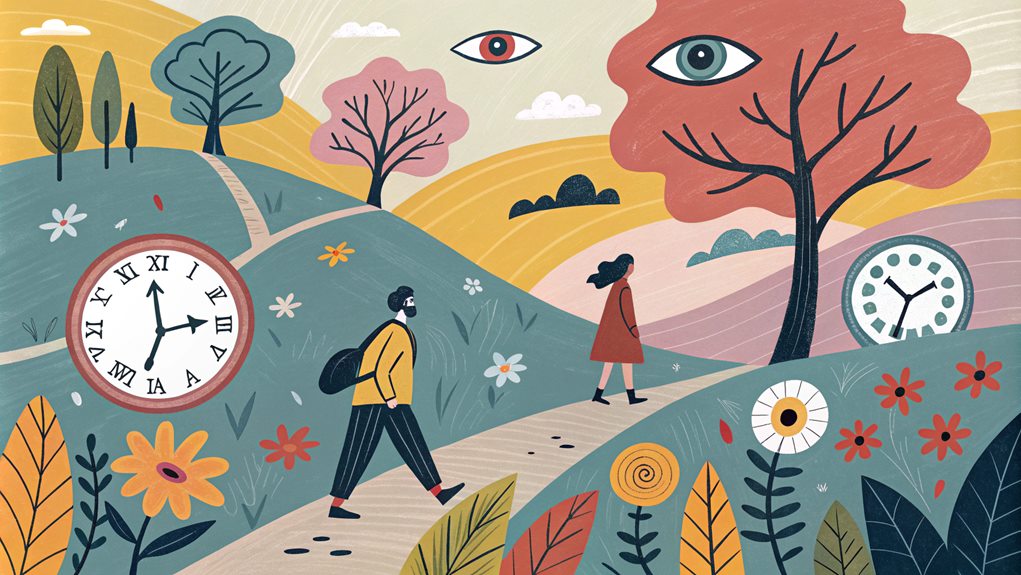
In exploring Surrealism, you'll encounter dreamlike imagery that challenges your perception of reality. Meanwhile, Symbolism invites you to experience deeper emotional connections through its rich visual language. Together, these movements reveal Picasso's ability to intertwine complex themes in his art.
Surrealism's Dreamlike Imagery
Surrealism frequently captivates viewers with its dreamlike imagery, drawing them into a world where the unconscious takes center stage. You're invited to explore a domain where the bizarre and the fantastical merge, creating a visual narrative that challenges your perceptions. This movement encourages you to abandon logic and embrace the irrational, showcasing scenes that seem plucked from a dream.
Imagine standing before a canvas filled with:
- A melting clock draped over a tree branch, evoking a sense of time slipping away.
- A serene landscape populated by disembodied eyes, watching you as you navigate this strange terrain.
- A distorted figure with exaggerated features, blurring the lines between reality and fantasy.
- An endless staircase spiraling into an unknown abyss, beckoning you to explore its mysteries.
These elements invite you to question your understanding of reality and explore deeper into your subconscious. Surrealism isn't just about what you see; it's about the feelings and thoughts those images provoke. You might find that each encounter with these works opens a door to your own imagination, prompting you to reflect on the power of dreams and the hidden layers of your mind.
Symbolism's Emotional Depth
Emotion permeates the artwork of Symbolism, inviting you to explore the depths of human experience. Unlike the direct representation of reality in some art movements, Symbolism investigates the inner workings of the mind and soul. You'll notice how artists use vivid imagery and rich colors to evoke feelings that resonate on a personal level. Each brushstroke communicates a sense of longing, nostalgia, or even despair.
As you engage with these works, you'll find that Symbolism often embraces themes of dreams, mythology, and spirituality. This approach allows you to connect with the art beyond surface aesthetics. You'll see how artists like Odilon Redon and Gustave Moreau masterfully create dreamlike scenes that challenge your perception of reality.
In Symbolism, emotions aren't just expressed; they're intensified. The use of symbols and metaphors invites you to interpret deeper meanings, reflecting your own thoughts and feelings. This is where the emotional depth lies, as you're drawn into a world that mirrors your inner experiences. Through this lens, Symbolism becomes not just an art movement but a profound journey into the complexities of human emotion.
Neoclassicism and Return to Tradition
How did Pablo Picasso navigate the complex landscape of Neoclassicism and the return to tradition? During the 1910s, Picasso embraced elements of Neoclassicism, blending them with his innovative style. This period marked a significant shift in his artistic expression, as he sought to reconcile modernism with classical ideals. You'll notice how he turned to the human figure, exploring its form with a sense of order and harmony.
- His works showcased a return to classical subjects, like mythological figures and portraits.
- Picasso's palette shifted to softer tones, reminiscent of earlier art movements.
- He experimented with linear perspective, highlighting depth and structure in his pieces.
- The influence of ancient art can be seen in his emphasis on clarity and proportion.
This exploration of Neoclassicism not only reflected his evolving artistic vision but also captured the cultural longing for stability in a rapidly changing world. By engaging with tradition, Picasso created a bridge between the past and the present, ultimately enriching his dynamic body of work.
Late Works and Experimentation
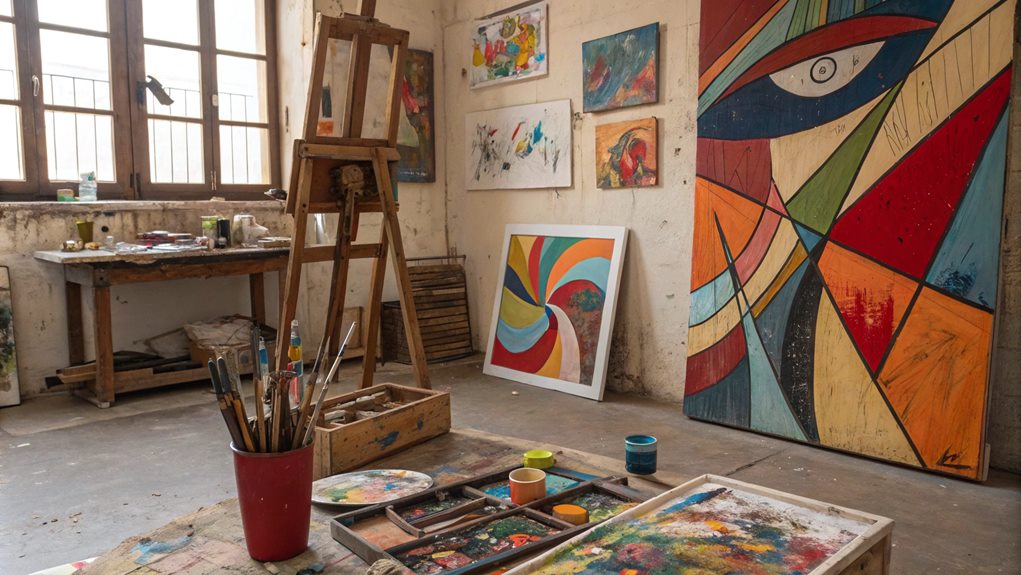
As you explore Picasso's late works, you'll notice a fascinating shift from his earlier Blue and Rose periods to the bold experimentation with Surrealism and Symbolism. His innovative approach led to striking abstract pieces that pushed the boundaries of art. You'll see how these changes reflect both his personal evolution and the broader art movements of his time.
Blue and Rose Periods
Pablo Picasso's Blue and Rose Periods mark transformative phases in his artistic journey, showcasing his evolving style and emotional depth. During the Blue Period (1901-1904), you'll notice a somber palette dominated by blue tones, reflecting themes of poverty, isolation, and melancholy. This phase is marked by a deep sense of empathy for the downtrodden, capturing the struggles of human existence.
Then comes the Rose Period (1904-1906), where Picasso shifts to warmer hues, particularly pinks and light oranges. This era celebrates joy, love, and the beauty of life, often depicting circus performers and acrobats, revealing a more playful side.
Here's a glimpse into these two significant periods:
- Blue Period: Focus on sadness, loneliness, and despair.
- Rose Period: Emphasis on warmth, love, and the human spirit.
- Emotional Depth: Both periods reflect personal experiences, showcasing Picasso's journey through hardship and joy.
- Artistic Evolution: Change from somber themes to a more vibrant, expressive style.
These periods not only highlight Picasso's technical skill but also his ability to convey profound human emotions through art.
Surrealism and Symbolism
Throughout his later years, Picasso embraced Surrealism and Symbolism, pushing the boundaries of his creativity and experimentation. You'll notice how his work began to reflect dreams, subconscious thoughts, and symbolic imagery. These elements allow you to explore deeper meanings hidden within the vibrant colors and distorted forms.
In this phase, Picasso experimented with new techniques and materials, often breaking from traditional artistic conventions. You might find his use of collage particularly intriguing, as he combined various textures and media to create rich, layered compositions. This approach not only invigorated his work but also challenged your perception of reality and art.
Picasso's late works often featured exaggerated figures and surreal landscapes, inviting you to question what's real and what's imagined. His fascination with mythology and symbolism adds another layer, inviting personal interpretations and connections.
Later Abstract Innovations
In his later years, Picasso's experimentation with abstraction reached new heights, breaking conventional boundaries and redefining artistic expression. You'll notice that his late works reveal a deep exploration of form, color, and composition. These pieces often challenge the viewer's perception, inviting you to engage with the art on a more profound level.
Consider the following aspects of his later abstract innovations:
- Fragmentation: Picasso deconstructed objects and figures, presenting multiple perspectives within a single work.
- Bold Colors: He embraced vibrant hues, using color to evoke emotion and create dynamic contrasts.
- New Materials: Picasso experimented with collage, incorporating unconventional materials like newspaper clippings, which added texture and depth.
- Simplification: He distilled subjects to their essence, focusing on basic shapes that still conveyed complex ideas.
Through these innovations, Picasso not only advanced his own artistic journey but also influenced countless artists who followed. You can see how his willingness to push boundaries and explore the unknown paved the way for future movements in modern art.
Legacy and Impact on Art
Picasso's influence on the art world is undeniable, shaping countless movements and inspiring generations of artists. You see, his innovative techniques and bold experimentation opened doors to new possibilities in visual expression. By co-founding Cubism, he challenged the traditional notions of perspective and form, encouraging you and other artists to explore abstraction and fragmentation in their work.
His impact extends beyond just visual arts; Picasso's approach to creativity and his fearless disregard for conventions have inspired countless disciplines, including literature, theater, and film. You can see his influence in the works of artists like Georges Braque, Juan Gris, and even contemporary creators who draw from his legacy.
Moreover, Picasso's ability to reinvent himself throughout his career teaches you the importance of evolution in art. He embraced change, allowing his style to shift over decades, which encourages you to remain flexible in your artistic journey.
Ultimately, Picasso's legacy is a reflection of the power of innovation and the importance of pushing boundaries. As you navigate your own artistic path, you're likely to feel his presence, reminding you to think outside the box and embrace creativity without limits.
Read The Next Blog Post –
To sum up, Picasso's journey through various art movements showcases his relentless creativity and adaptability. Did you know that he produced an astonishing 50,000 artworks during his lifetime? This staggering number highlights not just his prolific nature, but also his profound influence on the art world. As you explore his legacy, consider how each phase of his work challenges you to see art—and life—through a different lens, inspiring generations of artists to push boundaries and innovate.