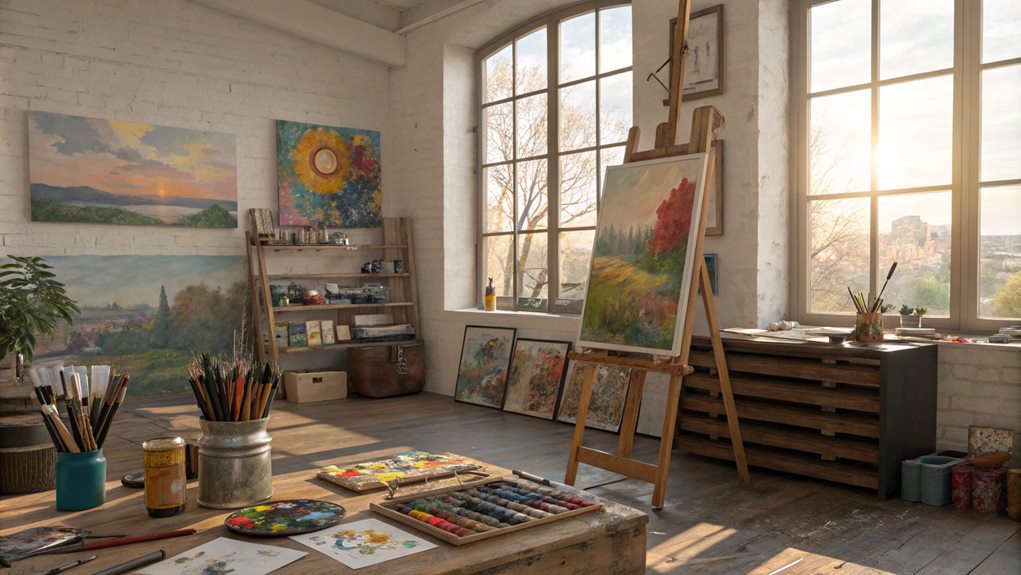


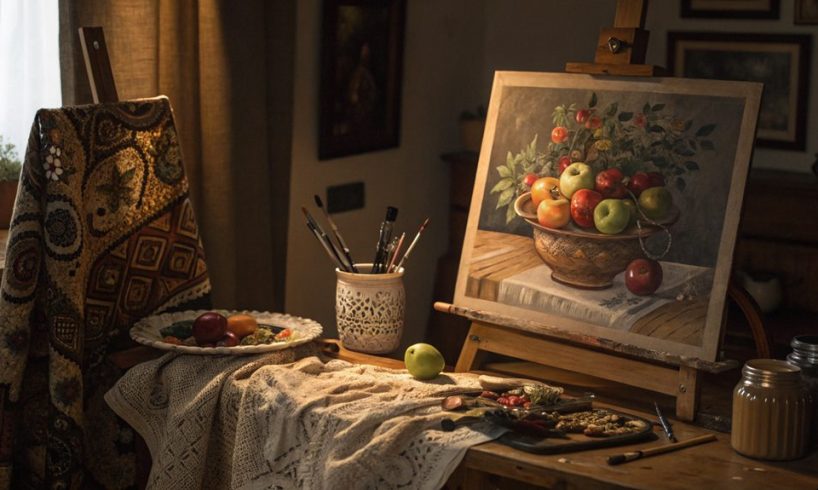
It’s interesting how you might stumble upon a painting by Gustave Courbet just as you’re reflecting on the struggles of everyday life. Realism, with its focus on ordinary subjects and meticulous detail, invites you to contemplate how artists like Courbet and Millet portrayed the dignity of labor during turbulent times. Their techniques not only captured the essence of their subjects but also made profound social statements. As you think about these masters, you may wonder how their approach continues to influence modern art and the way we perceive reality today.
Definition of Realism

Realism is an artistic movement that emerged in the mid-19th century, focusing on depicting everyday life and ordinary people with accuracy and sincerity. You’ll find that Realism distinguishes itself from previous artistic styles by rejecting romantic idealization. Instead, it emphasizes the mundane, often exploring themes that reflect the social issues of its time.
As you dive deeper into Realism, you’ll notice that it captures life as it is, without embellishment. Artists sought to portray the struggles and joys of common people, bringing attention to their experiences. This movement encourages you to see beauty in the ordinary, celebrating the simple moments of life that often go unnoticed.
In literature, authors like Gustave Flaubert and Henry James employed detailed descriptions and complex characters to paint a vivid picture of their societies. Similarly, in visual arts, painters like Gustave Courbet and Jean-François Millet concentrated on laborers and rural scenes, showcasing daily life instead of historical or mythological subjects.
Ultimately, Realism invites you to engage with the world around you and appreciate the authenticity of everyday experiences. It’s a movement that resonates with those who seek truth in art.
Historical Context
As you explore the roots of Realism, it’s important to contemplate the historical backdrop that shaped this movement. Emerging in the mid-19th century, Realism was a response to the dramatic changes sweeping through Europe, particularly the aftermath of the Industrial Revolution. This period saw rapid urbanization, with people flocking to cities in search of work, leading to significant social upheaval.
You’ll notice that artists and writers began to reflect the realities of everyday life, moving away from the grandiose themes of Romanticism. The rise of the middle class also influenced this shift, as more people sought art that depicted their own experiences and struggles. Additionally, the political climate, marked by revolutions and the quest for social justice, provided further impetus for this movement. Artists wanted to capture the truth of human existence, often portraying the lives of the working class and marginalized individuals.
Realism flourished in this environment, as creators aimed to depict the world without embellishment. By grounding their work in the ordinary, they challenged traditional artistic conventions, paving the way for future movements. Understanding this context helps you appreciate the significance and impact of Realism on art and literature.
Key Techniques in Realism
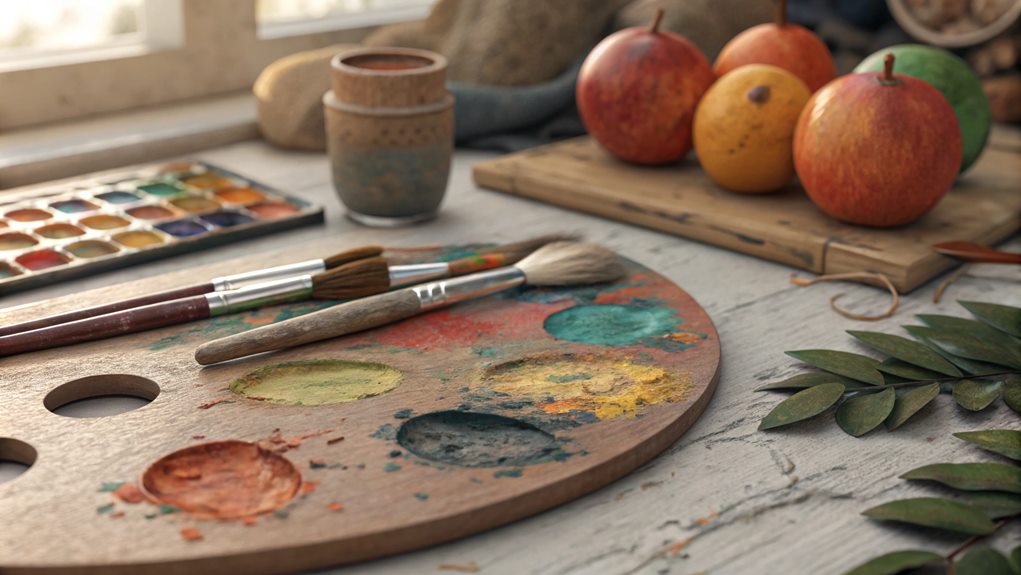
In realism, attention to detail is essential—you’ll notice how every brushstroke captures life’s nuances. The use of a naturalistic color palette further enhances this authenticity, making scenes feel more relatable and true to life. By focusing on these techniques, you can better appreciate the depth and richness that realism brings to art.
Attention to Detail
Attention to detail is essential for capturing the essence of reality in art and literature. When you focus on the minutiae, you bring life to your work, transforming ordinary scenes into vivid experiences. Every brushstroke or word choice matters; it’s the small elements that create authenticity.
In painting, you’ll want to observe textures, light, and shadow meticulously. Notice how light changes the appearance of objects at different times of day. This careful observation allows you to replicate the world faithfully, evoking a sense of immediacy in your audience.
In literature, your attention to detail manifests in character development and setting. You should describe not just what your characters look like, but how they interact with their environment. Consider their clothing, the sounds around them, and even subtle gestures. These elements create a rich tapestry that readers can immerse themselves in.
Ultimately, by honing your attention to detail, you’ll elevate your work from mere representation to a compelling reflection of life. This dedication distinguishes true realism from superficial imitation, inviting your audience to engage deeply with your art or writing.
Naturalistic Color Palette
Creating a naturalistic color palette is essential for achieving authenticity in realism. You want your artwork to resonate with viewers, capturing the essence of the subject. To do this effectively, follow these key techniques:
- Observe Nature: Spend time studying your surroundings. Notice how light interacts with colors in various settings—this will help you replicate those effects on your canvas.
- Limited Palette: Use a restricted selection of colors to create harmony in your work. This approach not only simplifies your choices but also enhances the naturalistic feel.
- Mixing Techniques: Blend colors on your palette rather than straight from the tube. This practice fosters subtlety and allows you to create more lifelike hues that reflect the complexity of real life.
- Layering: Apply colors in thin layers, building up depth gradually. This technique mimics the way colors appear in nature, lending a three-dimensional quality to your work.
The Role of Detail
While you might think that realism focuses primarily on the subjects it depicts, the role of detail is what truly brings those subjects to life. Every brushstroke and nuance contributes to the authenticity of the scene. The meticulous attention to small elements—textures, light patterns, and even the imperfections—pulls viewers into the moment, allowing them to connect on a deeper level.
Imagine standing before a painting. You can almost feel the roughness of a weathered barn door or the softness of a child’s hair. These details invite you to explore the artwork, to linger and discover subtleties you might miss at first glance. They create a tactile experience, transforming flat images into dynamic narratives.
In realist art, detail isn’t just an aesthetic choice; it serves as a bridge between the viewer and the subject. It evokes emotions, stirs memories, and sparks curiosity. You find yourself drawn to the story behind each element, prompting questions about the lives within the artwork. Ultimately, the role of detail in realism enriches your experience, making the ordinary extraordinary and inviting you to see the world through a more nuanced lens.
Everyday Life as Subject
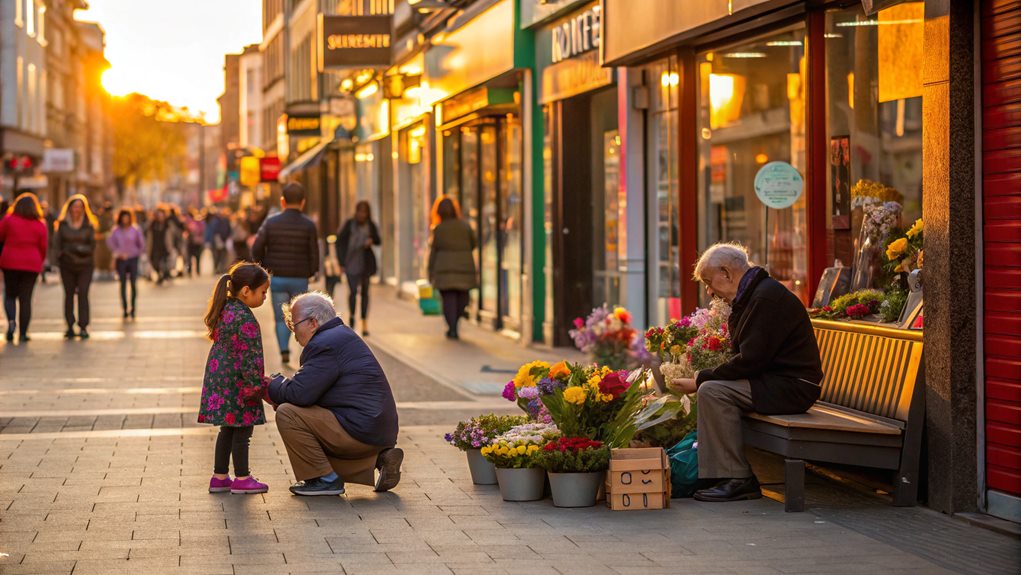
When you look at art that focuses on everyday life, you see how ordinary moments can reveal deeper social realities. These works often use symbolism to highlight the beauty and complexity of daily experiences. By capturing these scenes, artists invite you to reflect on the world around you in a new way.
Depicting Ordinary Moments
Everyday life serves as a powerful canvas for realism, capturing moments that resonate with the viewer’s own experiences. When you look at these scenes, you often find beauty in the mundane, reminding you that life’s simplest moments can carry profound meaning. Realist artists excel in depicting ordinary moments, showcasing the richness of daily existence.
Here are four common themes you might notice in their work:
- Family Gatherings: You can see intimate scenes of people sharing meals, laughter, and stories, reflecting the warmth of human connection.
- Labor and Work: These pieces often portray individuals engaged in everyday tasks, emphasizing the dignity and importance of hard work.
- Neighborhood Life: Artists capture the hustle and bustle of local streets, highlighting the vibrancy of community interactions.
- Quiet Solitude: You may find depictions of individuals in contemplative moments, evoking a sense of peace and introspection amidst chaos.
Capturing Social Realities
Realist artists often extend their focus from personal moments to broader social realities, reflecting the complexities of life that shape communities. When you look at their work, you see more than just individual stories; you witness the collective experiences of people from different backgrounds. These artists immerse themselves in the fabric of society, capturing the struggles and triumphs of everyday life.
You might notice how they paint bustling streets, crowded marketplaces, or quiet moments in homes, each scene revealing deeper social issues. They don’t shy away from portraying poverty, labor, and the hustle of urban life. By doing so, they invite you to engage with these realities and consider the conditions that affect people’s lives.
In their art, you find not just aesthetic beauty but also a mirror reflecting societal truths. Each brushstroke serves to document the era’s social dynamics, encouraging empathy and understanding. As you absorb these artworks, you realize that realism isn’t merely about replication; it’s a powerful commentary on life itself. Ultimately, these artists compel you to think critically about the world around you, urging you to see the interconnectedness of individual experiences within the broader social landscape.
Symbolism in Daily Life
Daily life is rich with symbolism, often serving as a canvas for deeper meanings in realist art. You might not realize it, but the ordinary items and moments around you can convey powerful messages. Artists often draw on these symbols to invite viewers to reflect on their own experiences and emotions. Here are a few everyday elements that can carry significant weight:
- A cracked mirror: This can symbolize fractured identity or self-perception, reflecting the struggle for self-acceptance.
- A wilting flower: This often represents the passage of time or the inevitability of decay, prompting thoughts on mortality.
- A crowded street: This scene can signify isolation in a bustling world, highlighting the contrast between physical proximity and emotional distance.
- An empty chair: This may evoke feelings of loss or absence, serving as a reminder of those who are no longer present.
Influential Masters of Realism
The world of Realism is shaped by influential masters who’ve transformed artistic expression through their keen observations and authentic portrayals of life. You can’t discuss this movement without acknowledging artists like Gustave Courbet, who challenged traditional norms by focusing on everyday subjects. His works often reflect the struggles of ordinary people, pushing you to see the beauty in the mundane.
Then there’s Édouard Manet, who blurred the lines between Realism and Impressionism. His bold brushwork and unconventional compositions invite you to question societal norms while appreciating the vibrancy of contemporary life. You’ll also encounter the powerful images of Jean-François Millet, whose depictions of rural laborers evoke empathy and connection to the human condition.
Don’t overlook the contributions of Honoré Daumier, whose political cartoons and paintings expose social injustices, urging you to reflect on the world around you. Each of these masters brings a unique perspective that invites you to engage with their art, challenging you to find meaning in the everyday. By exploring their work, you’ll gain insight into the heart of Realism and its enduring impact on the art world.
Case Studies of Notable Works
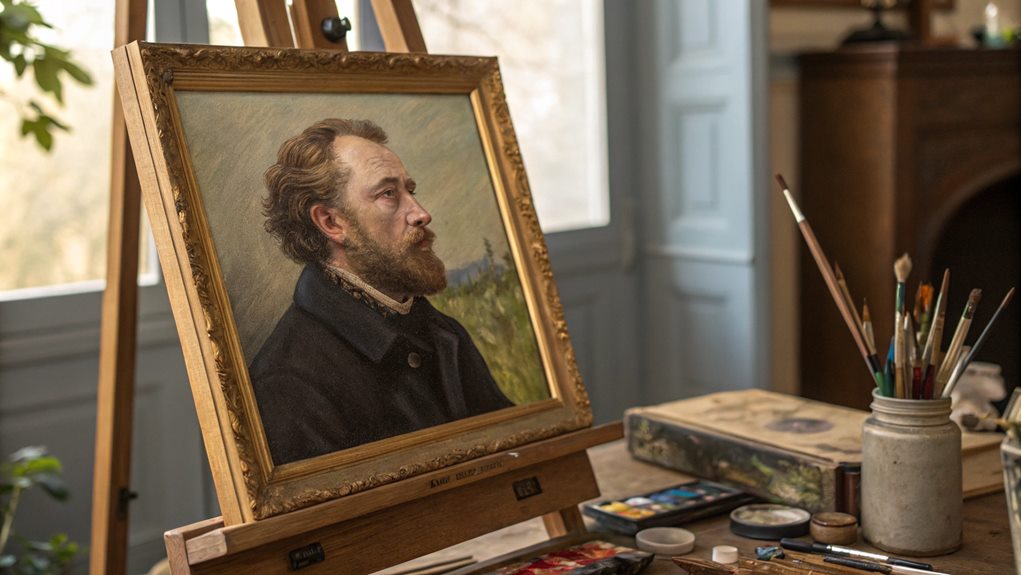
In examining notable works from the Realism movement, you’ll discover pieces that not only depict scenes from everyday life but also provoke thought and evoke emotion. Each artwork tells a story grounded in reality, capturing the essence of human experience. Here are four exemplary works that exemplify the movement’s principles:
- “The Stone Breakers” by Gustave Courbet – This painting illustrates laborers engaged in hard work, emphasizing the dignity of manual labor and the struggles of the working class.
- “The Gleaners” by Jean-François Millet – In this piece, you see three peasant women gathering leftover grains after the harvest, showcasing the harsh realities of rural life and the resilience of the poor.
- “A Burial at Ornans” by Gustave Courbet – This monumental work depicts a funeral scene, stressing the starkness of death and the communal experience of grief in a realistic manner.
- “The Dance Class” by Edgar Degas – This painting captures a moment in a ballet class, revealing the discipline and dedication of dancers while highlighting their everyday struggles.
These works invite you to reflect on the human condition, making them significant in the Realism movement.
Impact on Modern Art
Although the Realism movement primarily focused on everyday life in the 19th century, its impact on modern art is profound and enduring. You can see this influence in the way contemporary artists explore themes of authenticity and social issues. Realism encouraged you to appreciate the mundane and challenged the idealized representations common in earlier art.
As you investigate modern art, you’ll notice a shift towards depicting raw, unfiltered experiences. Artists like Edward Hopper and Lucian Freud carry the torch of Realism, capturing the complexities of human existence and emotion. Their works often resonate with the struggles of modern life, reflecting the realities you face today.
Moreover, Realism paved the way for various movements, including Social Realism and Photorealism, which emphasize truthfulness in representation. It also inspired movements like Impressionism and Expressionism, where artists sought to convey personal perspectives grounded in reality.
Read The Next Blog Post –
In exploring Realism, you can’t help but notice how its focus on the ordinary resonates today. Just like Courbet and Millet captured the struggles of their time, you might find parallels in your own life—those small, everyday moments that reflect deeper truths. As you navigate through modern art, remember that the essence of Realism still lingers, inviting you to appreciate the beauty in the mundane and the stories hidden in plain sight.