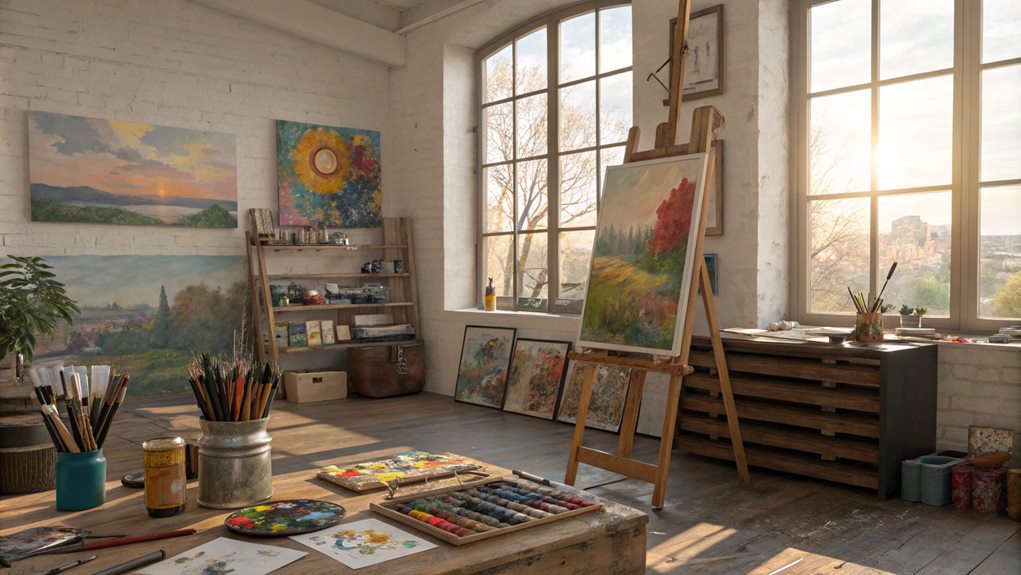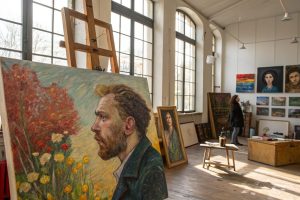


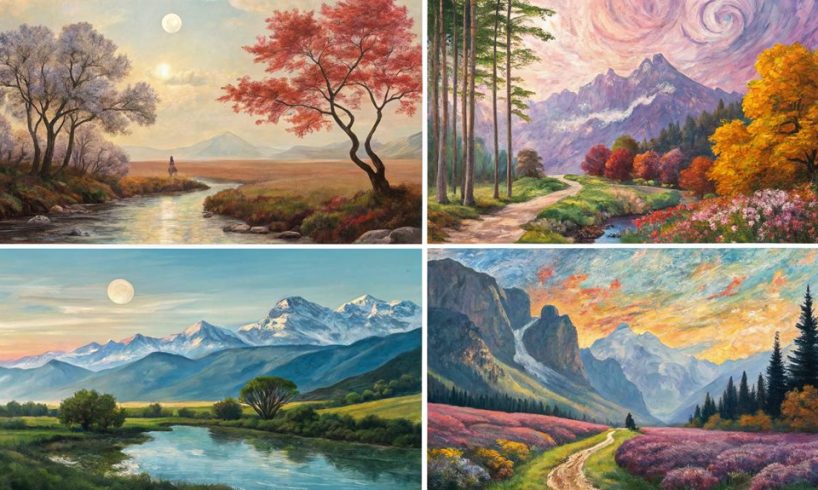
Just as the Mona Lisa captivates with her enigmatic smile, the world of painting styles offers a wealth of intrigue and depth. You might find yourself drawn to the light-play of Impressionism or the raw emotion of Expressionism, each style revealing a different aspect of human experience. Exploring these diverse techniques not only enhances your appreciation of art but also invites you to reflect on how these movements mirror societal shifts. What might these historical contexts reveal about the art you encounter today?
Overview of Painting Styles
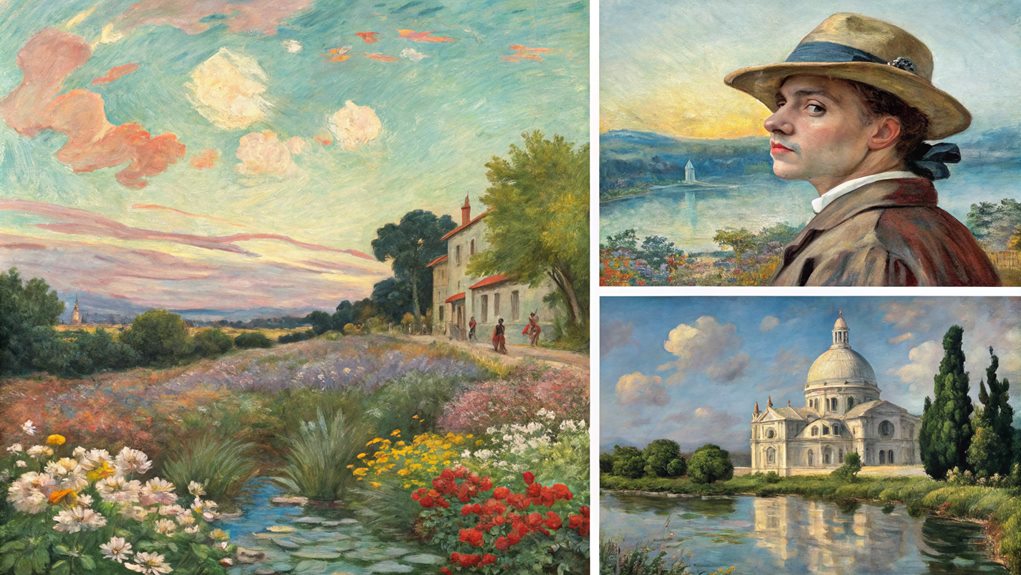
When you explore the world of painting styles, you’ll discover a rich tapestry of techniques and movements that have evolved over centuries. Each style offers a unique perspective, allowing you to express your creativity in various ways. For instance, Impressionism captures fleeting moments through loose brushwork and vibrant colors, inviting you to focus on light and movement.
On the other hand, Abstract art challenges traditional representation, encouraging you to think outside the box and interpret emotions through shapes and colors. Realism, in contrast, aims for lifelike depictions, pushing you to observe the world around you with acute detail.
As you investigate deeper, you might encounter styles like Surrealism, which blends dreamlike elements with reality, sparking your imagination. In addition, Pop Art, with its bold colors and commercial imagery, reflects contemporary culture and invites you to question the nature of art itself.
Ultimately, exploring these various painting styles helps you find your own voice as an artist. Embrace the diversity, experiment with different techniques, and let your creativity flourish as you navigate this vibrant world of artistic expression.
Classical Techniques
Now that you’ve got a handle on various painting styles, let’s explore classical techniques. You’ll learn about oil painting methods that create depth and richness, watercolor techniques that offer transparency and fluidity, and the fresco application process that brings vibrancy to walls. Each of these methods has its own unique charm and historical significance.
Oil Painting Methods
Oil painting methods, rooted in classical techniques, offer a rich tapestry of approaches that you can explore to achieve depth and vibrancy in your work. One of the most recognizable methods is the alla prima technique, where you paint wet on wet. This requires quick decisions and a confident brushstroke, allowing you to capture the essence of a scene in a single sitting.
Another method is the glazing technique, which involves applying thin layers of transparent paint over a dry base. This creates luminosity and complexity, as each layer interacts with the ones beneath it. You might find this process both rewarding and challenging, as patience is key.
The impasto technique, characterized by thick applications of paint, enables you to create texture and dynamic surfaces. You can experiment with palette knives or your brushes to achieve various effects.
Watercolor Techniques
Watercolor techniques, deeply rooted in classical practices, offer unique ways to express your artistic vision with fluidity and transparency. One of the fundamental techniques is wet-on-wet, where you apply wet paint onto a wet surface, allowing colors to blend beautifully. This method creates soft edges and ethereal washes, perfect for capturing atmospheric effects.
Another essential technique is wet-on-dry, where you paint wet paint onto a dry surface. This approach gives you sharper edges and more control over your brush strokes, ideal for detailed work. You might also explore glazing, which involves layering transparent washes to build depth and vibrancy. By letting each layer dry before adding another, you can achieve luminous colors.
Don’t forget about dry brush techniques, where you use a brush with minimal water to create texture and fine detail. Experimenting with these classical methods will help you understand the medium’s behavior and expand your creative possibilities. As you practice, you’ll discover how to manipulate water and pigment, leading to stunning results that showcase your personal style. Embrace these techniques, and let your watercolors flow!
Fresco Application Process
In fresco painting, the application process is vital for achieving lasting and vibrant results. First, you’ll prepare the wall by applying a rough coat of plaster, known as “arriccio.” This base layer gives your painting a solid foundation. Once it dries, you’ll apply a finer layer of plaster, called “intonaco,” where your colors will be applied. It’s essential to work quickly, as you’ll need to paint on this damp surface.
Here’s what you should keep in mind while working on your fresco:
- Choose your pigments wisely: Use natural pigments that bond well with the plaster.
- Plan your composition: Sketch your design lightly on the intonaco to guide your painting.
- Work in sections: Apply paint to small sections at a time, ensuring the plaster stays damp.
- Seal your work: Once completed, protect your fresco with a thin layer of varnish to enhance durability.
Impressionism Explained
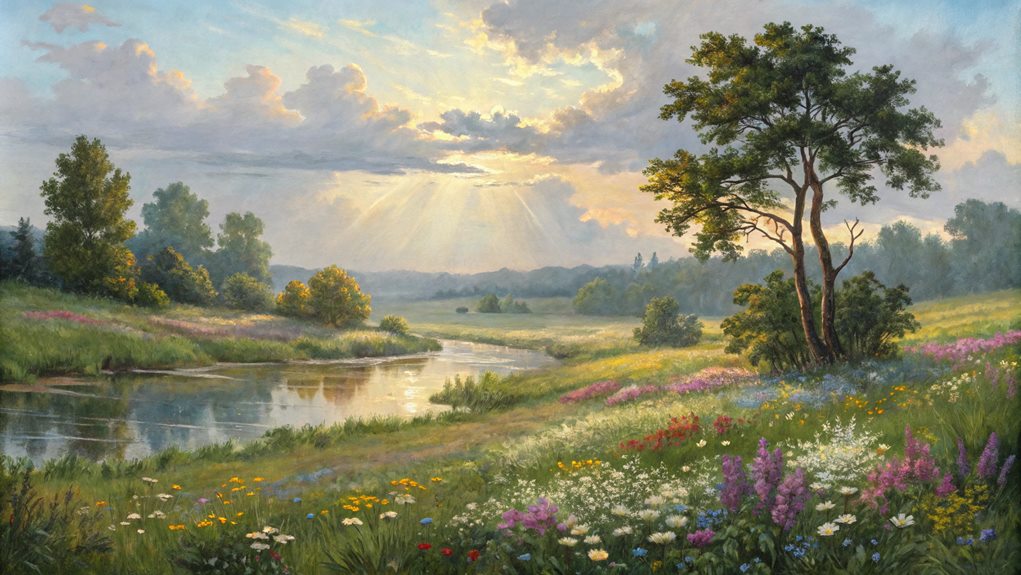
Often characterized by its emphasis on light and color, Impressionism emerged in the late 19th century as a revolutionary movement that transformed the art world. You’ll notice that Impressionist artists focused on capturing fleeting moments and the effects of light on the environment, often painting en plein air, or outdoors. This technique allowed them to observe and convey the changing qualities of light throughout the day.
Key figures such as Claude Monet, Pierre-Auguste Renoir, and Edgar Degas played a crucial role in shaping this style. They often used loose brushwork and vibrant colors, breaking away from traditional techniques and formal compositions. Instead of focusing on detail, Impressionists aimed to express the essence of a scene, encouraging you to appreciate the beauty in everyday life.
The movement faced criticism initially, but it paved the way for modern art by challenging established norms. As you explore Impressionism, consider how the artists sought to evoke emotion and atmosphere rather than simply replicate reality. This approach invites you to look beyond the surface and appreciate the subtleties of light and color in the world around you, making Impressionism an enchanting and enduring style in art history.
Expressionism Characteristics
When you explore Expressionism, you’ll notice its emotional intensity that pushes boundaries in art. Bold color choices grab your attention, while distorted forms and perspectives challenge your perception of reality. This unique style invites you to experience feelings in a way that traditional art often doesn’t.
Emotional Intensity in Art
A significant feature of Expressionism is its ability to convey deep emotional intensity, drawing you into the artist’s inner world. When you look at Expressionist works, you often feel a powerful connection to the emotions expressed on the canvas. The artists don’t just depict reality; they transform it, using their art to share feelings of angst, joy, despair, or rage. This raw emotion can resonate deeply, inviting you to reflect on your own experiences.
To fully appreciate the emotional intensity in Expressionism, consider these aspects:
- Subjective Experience: Each piece reflects the artist’s personal feelings, allowing you to engage with their unique perspective.
- Distorted Forms: You’ll notice exaggerated shapes and figures, which heighten the emotional impact and challenge traditional representations.
- Dynamic Composition: The movement within the artwork often creates a sense of urgency, pulling you into the scene.
- Symbolic Imagery: Look for symbols that convey deeper meanings, helping you understand the emotional context behind the artwork.
Bold Color Choices
Bold color choices are a hallmark of Expressionism, instantly grabbing your attention and evoking strong emotional responses. As you explore this style, you’ll notice how artists use vivid hues to express feelings rather than to mimic reality. You might find that the colors aren’t just about aesthetics; they convey deep emotions like joy, sorrow, or anger.
In Expressionist works, colors often clash or contrast dramatically, creating an intense visual experience. You may see brilliant reds symbolizing passion, deep blues representing melancholy, or bright yellows evoking happiness. Each brushstroke and color choice serves a purpose, guiding your emotional journey through the piece.
As you engage with these artworks, pay close attention to how the color palette influences your mood. You might feel exhilarated by bold reds and oranges or unsettled by stark blacks and greens. The artists’ fearless use of color challenges traditional norms, encouraging you to interpret their work on a personal level.
In this way, bold color choices become more than just decoration; they transform into a powerful language of expression, inviting you to experience a spectrum of emotions while traversing the complexities of human experience.
Distorted Forms and Perspectives
Expressionism doesn’t just play with color; it also manipulates forms and perspectives to convey emotional depth. When you look at Expressionist paintings, you’ll notice how shapes are often exaggerated or distorted. This technique helps to highlight the subject’s emotional state rather than merely representing reality. You might find that figures appear elongated, fragmented, or even abstracted, creating a sense of urgency and intensity.
As you explore this style, consider how these distortions affect your perception:
- Exaggeration of Features: Notice how facial expressions and body language are amplified to evoke feelings.
- Dynamic Angles: Look for unconventional viewpoints that create a sense of movement and chaos.
- Color Interaction: Observe how distorted forms interact with bold colors to enhance emotional responses.
- Symbolic Shapes: Pay attention to shapes that may have symbolic meanings, adding layers to the narrative.
These elements work together to pull you into the artist’s emotional landscape, inviting you to experience their inner turmoil or joy. Embrace the chaos and let it provoke thoughts and feelings within you.
Abstract Art Forms
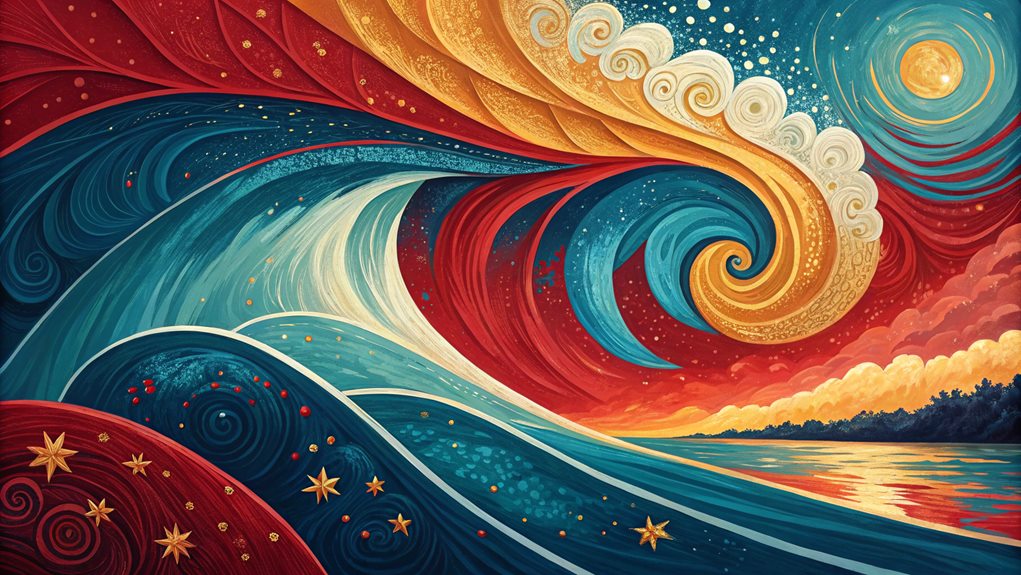
Throughout the 20th century, various abstract art forms emerged, challenging traditional representations of reality. You’ll find that these forms often prioritize color, shape, and line over representational accuracy. Artists like Wassily Kandinsky and Piet Mondrian sought to convey emotional experiences rather than depict the physical world. This shift encourages you to explore your own perceptions and feelings, making abstract art a deeply personal experience.
In abstract art, the absence of recognizable subjects invites you to interpret the work in your own way. You might notice how vibrant colors can evoke different moods, or how dynamic lines can create a sense of movement. This freedom of interpretation is one of the most exciting aspects of abstract art forms.
There’s also a focus on process and technique, where the act of painting becomes as significant as the finished product. Techniques like dripping or layering paint challenge conventional approaches, inviting you to appreciate the journey of creation. As you engage with abstract art, you’ll discover a whole new world of possibilities, where the only limit is your imagination. Embrace the ambiguity and let your mind wander—this is where the magic of abstract art truly lies.
Surrealism and Dreams
Surrealism transports you into a dreamlike world where reality and imagination intertwine. This fascinating art movement, which emerged in the early 20th century, encourages you to explore the subconscious, revealing the bizarre and unexpected connections between your thoughts and experiences. Surrealist painters like Salvador Dalí and René Magritte invite you to question reality, often using absurd juxtapositions and dream imagery that challenge your perceptions.
To fully appreciate surrealism, keep these tips in mind:
- Embrace the Unconventional: Look for unexpected elements, like melting clocks or floating objects, that defy logic.
- Explore Your Subconscious: Allow your mind to wander and make connections between seemingly unrelated ideas, just as the artists did.
- Feel the Emotions: Pay attention to the feelings that arise when you view a surreal piece; it’s often a reflection of your own dreams and fears.
- Interpret Freely: There’s no single meaning in surrealism. Trust your instincts and interpret the artwork based on your own experiences.
Modern and Contemporary Trends

As the art world evolved from the dreamlike qualities of surrealism, modern and contemporary trends emerged, reflecting the complexities of society and individual experience. You’ll notice that these trends often challenge traditional boundaries, inviting you to engage with art in new ways. Abstract expressionism, with its emphasis on spontaneous creation, encourages you to explore emotions directly. You’ll find that artists like Jackson Pollock and Mark Rothko invite personal interpretation through color and form.
Minimalism, on the other hand, strips away the unnecessary, urging you to appreciate simplicity and clarity. When you view works from artists like Donald Judd or Agnes Martin, consider how the absence of excess speaks volumes.
Contemporary trends also embrace technology, using digital mediums to create immersive experiences. You might encounter installations that blend video, sound, and physical space to engage your senses.
Street art has exploded into the mainstream, offering a voice to the voiceless and transforming urban landscapes. As you explore these modern and contemporary styles, keep an open mind. They reflect not just the artists’ visions but also the world around you, making art a dynamic conversation with society.
Influences on Today’s Art
Today’s art is profoundly shaped by a myriad of influences, from cultural shifts to technological advancements. As you explore this vibrant landscape, you’ll notice how these factors intertwine, creating a dynamic environment for artists today.
Cultural movements, social issues, and global events often inspire the themes and subjects seen in contemporary works. You can see how artists respond to everything from climate change to social justice, using their platforms to spark conversations. Furthermore, technology plays an essential role in shaping artistic practices. Digital tools have revolutionized how artists create, allowing for experimentation and innovation like never before.
Here are some key influences on today’s art:
- Cultural Diversity: Artists draw from a rich tapestry of cultural backgrounds, enriching their work with varied perspectives.
- Social Media: Platforms like Instagram allow artists to reach global audiences and share their work instantly.
- Political Climate: Current events inspire powerful commentary and activism through art.
- Sustainability: Many artists are adopting eco-friendly practices and themes, reflecting a growing awareness of environmental issues.
Read The Next Blog Post –
In exploring painting styles, you’ve journeyed through vibrant landscapes of creativity, where each brushstroke tells a story. From the soft whispers of Impressionism to the bold cries of Expressionism, every movement dances with emotion and meaning. As you embrace modern trends, remember that art is a mirror reflecting society’s pulse. Let these styles inspire you to pick up your own brush, painting your thoughts and dreams onto the canvas of life, where every color sings your unique song.