

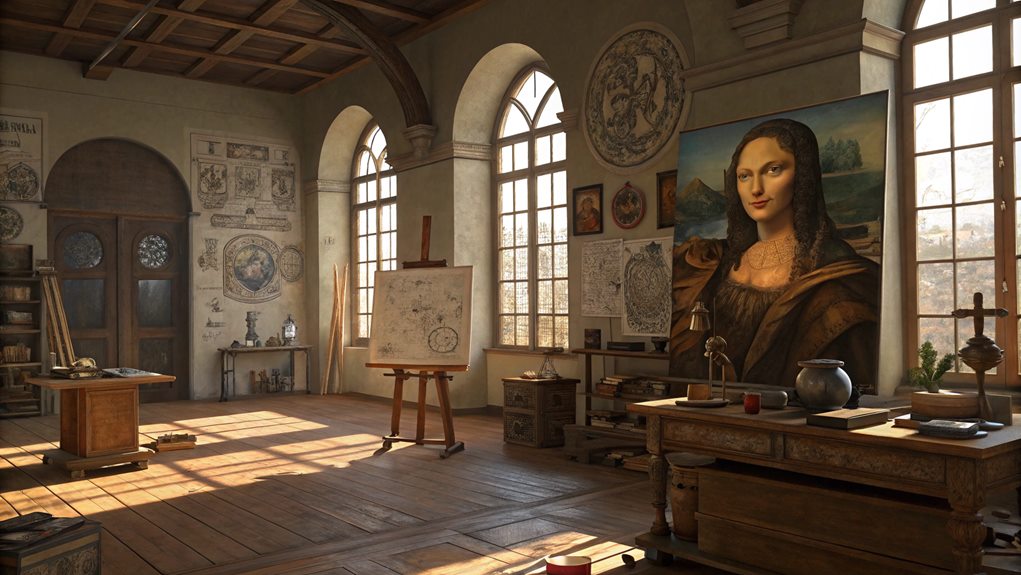
When you think about a life well-lived, Leonardo Da Vinci certainly comes to mind, embodying the essence of the Renaissance. His artistic genius and scientific curiosity merged in ways that not only shaped his time but continue to resonate today. You may wonder how a painter could also be a visionary engineer and anatomist, creating a legacy that spans multiple disciplines. As you explore his journey, you'll find there are layers to his contributions that challenge conventional boundaries, inviting you to reflect on how his work influences our understanding of art and science even now.
Early Life and Background
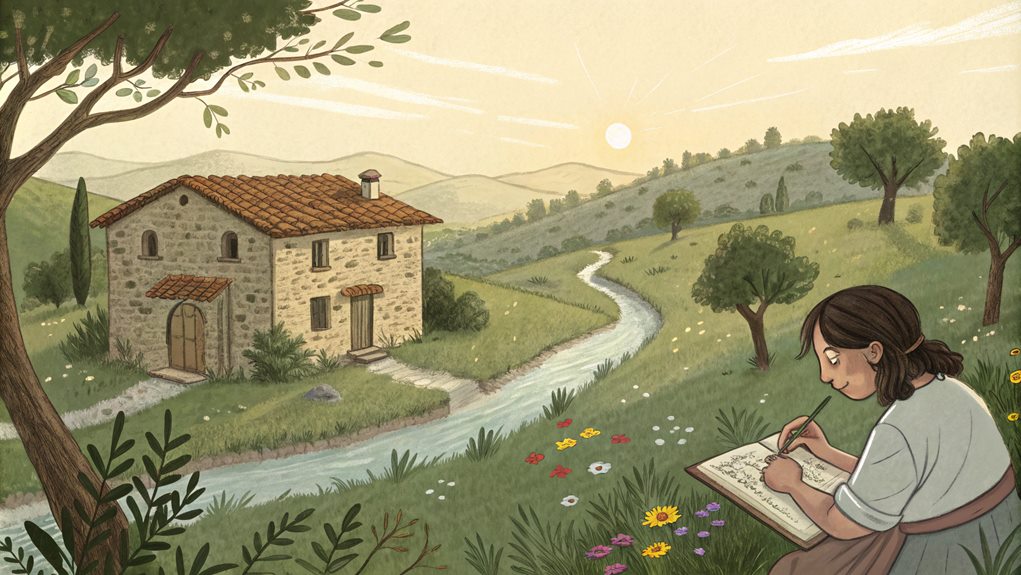
Born in the small town of Vinci in 1452, Leonardo da Vinci's early life laid the groundwork for his extraordinary career. You might find it interesting that he was born to a peasant woman and a wealthy notary, but his illegitimate status didn't hinder his thirst for knowledge. Growing up in a rural environment, he immersed himself in nature, observing the world around him. This curiosity sparked a lifelong passion for understanding the mechanics of life.
At just fourteen, you'd see him apprenticed to Andrea del Verrocchio, a prominent artist in Florence. This apprenticeship exposed him to various skills, from painting to sculpting, and it's where he honed his talents. You can imagine the bustling workshop filled with creativity and innovation, which greatly influenced his artistic and scientific journey.
Leonardo's diverse interests also led him to study anatomy, mechanics, and botany. His early experiences cultivated a unique blend of artistry and scientific inquiry, shaping his future work. So, when you think of da Vinci, remember that his remarkable early life set the stage for the genius he would become, blending art and science in ways that would inspire generations.
Artistic Achievements
When you think about Leonardo Da Vinci, his masterpieces of Renaissance art immediately come to mind. He didn't just create stunning paintings; he also introduced innovative techniques and styles that changed the art world forever. His influence on modern art is undeniable, leaving a legacy that continues to inspire artists today.
Masterpieces of Renaissance Art
During the Renaissance, art flourished like never before, with Leonardo da Vinci standing out as a master of this transformative period. You can't help but admire his ability to blend science and art, creating works that convey deep emotion and unparalleled realism. His most famous pieces, like the "Mona Lisa," mesmerize with her enigmatic smile, inviting you to ponder her story.
In "The Last Supper," you witness a dramatic moment frozen in time, where each apostle's expression captures their reaction to Jesus' announcement of betrayal. It's not just a painting; it's a narrative filled with tension and emotion, showcasing da Vinci's keen understanding of human psychology.
You might also appreciate his lesser-known works, such as "The Virgin of the Rocks," which highlight his mastery of composition and light. Each piece reflects his unique vision and mastery of detail, setting a benchmark for artists who followed.
Da Vinci's masterpieces aren't just artworks; they're windows into the human experience, inviting you to explore themes of love, betrayal, and divine connection. His legacy continues to inspire, reminding you of the power of art to transcend time and culture.
Innovative Techniques and Styles
Leonardo da Vinci revolutionized the world of art with his innovative techniques and styles that set new standards for realism and expression. You'll notice how he mastered the use of sfumato, a technique that creates a soft shift between colors and tones, allowing for a more lifelike depiction of subjects. This method adds depth and dimension, making his paintings feel almost three-dimensional.
You can also appreciate his keen understanding of human anatomy, which enabled him to capture the natural posture and movement of figures. His detailed studies of the human body not only informed his art but also elevated the accuracy of anatomical representation in the Renaissance.
Additionally, da Vinci employed chiaroscuro, the contrast of light and shadow, to enhance the emotional impact of his work. This technique draws your eye to focal points, guiding your emotional response.
Furthermore, his innovative compositions often broke traditional conventions, creating dynamic interactions between figures and their surroundings. Through these methods, Leonardo didn't just paint; he created immersive experiences that invite you to explore the world he envisioned. His artistic achievements truly paved the way for future generations of artists, inspiring creativity and exploration.
Influence on Modern Art
Through his groundbreaking techniques and visionary approach, da Vinci's influence on modern art is profound and far-reaching. You can see this impact in how contemporary artists employ light, shadow, and perspective to create depth and realism. His mastery of sfumato, the technique of blending colors and tones, has inspired countless painters to push the boundaries of their craft.
When you look at modern works, you might notice that many artists draw upon da Vinci's principles of anatomy and proportion. His meticulous studies of the human body laid the groundwork for how you understand form and movement in art today. Even in digital art, the principles he championed continue to resonate, guiding creators in their pursuit of realism.
Moreover, da Vinci's interdisciplinary approach encourages you to explore various fields. He didn't just paint; he studied science, engineering, and nature, which has led many modern artists to integrate different disciplines into their work. This holistic view fosters innovation and creativity. So, as you engage with contemporary art, remember that da Vinci's spirit of exploration and excellence remains a guiding light for artists around the globe.
Major Paintings
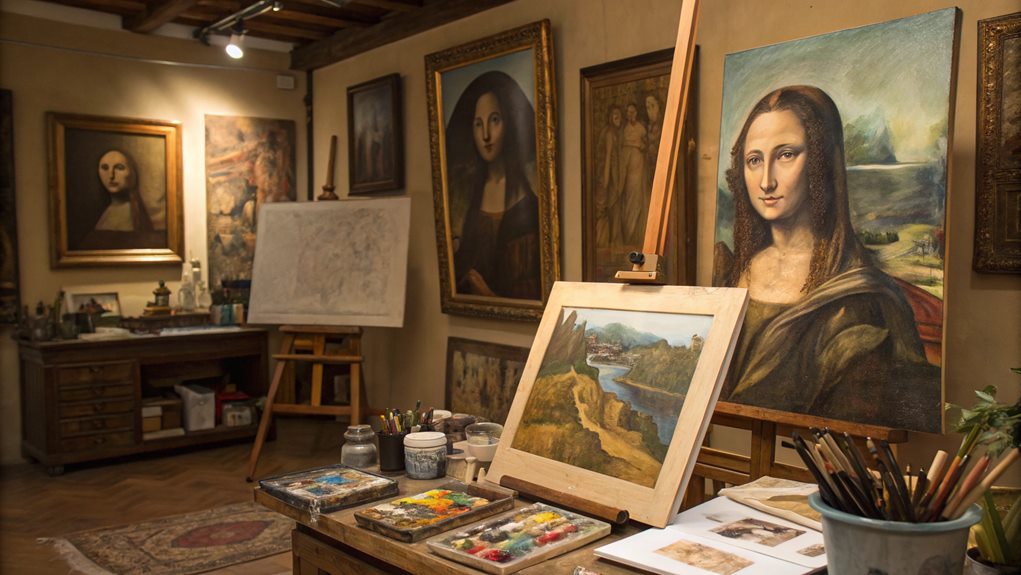
Art enthusiasts often marvel at Leonardo da Vinci's major paintings, which showcase his unparalleled talent and innovative techniques. Among these masterpieces, "The Last Supper" stands out as a remarkable depiction of Jesus and his apostles during their final meal. You can appreciate how da Vinci captured the emotional intensity of the moment, using composition and perspective to draw the viewer's eye toward the central figure of Christ.
Another iconic work, "Mona Lisa," captivates audiences with her enigmatic smile and the masterful use of sfumato, a technique that creates soft gradations between colors. You'll find that her gaze seems to follow you, inviting personal reflection and intrigue.
In addition, "Virgin of the Rocks" demonstrates da Vinci's skill in portraying complex compositions and natural landscapes. The interplay of light and shadow highlights his keen observation of the natural world.
Each painting reveals da Vinci's deep understanding of human emotion and anatomy, combined with his groundbreaking approach to perspective. As you explore these major works, you'll discover why Leonardo remains a towering figure in the art world, inspiring countless artists and admirers alike.
Contributions to Science
When you think about Leonardo Da Vinci, his contributions to science might not be the first thing that comes to mind, but they're truly remarkable. His anatomical studies and engineering designs showcase an extraordinary blend of art and science. These innovations not only advanced knowledge in his time but also laid the groundwork for future discoveries.
Anatomical Studies and Discoveries
Leonardo da Vinci's anatomical studies stand as a demonstration of his insatiable curiosity and groundbreaking contributions to science. You'll find that his meticulous dissections of human and animal bodies revealed a depth of understanding that was unprecedented for his time. Da Vinci didn't just observe; he recorded his findings with astonishing detail. His sketches of muscles, bones, and organs showcased not only their structure but also their function, laying the groundwork for modern anatomy.
As you explore his work, you'll discover how he connected anatomy with art, illustrating how the human form moves and functions. His studies on the heart, for example, were revolutionary, as he accurately depicted its chambers and valves long before they were confirmed by later scientists. Da Vinci's insistence on observation and experimentation over accepted theories marked a significant shift in scientific methodology.
You can appreciate that his anatomical drawings, which filled notebooks and pages, combined art with science in a way that inspired countless future generations. His pioneering spirit pushed the boundaries of what was known, solidifying his legacy as a true polymath who straddled the worlds of art and science.
Engineering Innovations and Designs
Building on his anatomical studies, Leonardo da Vinci's engineering innovations and designs showcase his remarkable ability to blend creativity with scientific principles. His work laid the groundwork for various fields, including mechanics, hydraulics, and aerodynamics. You'll find that Leonardo didn't just draw; he conceptualized machines that were ahead of his time, demonstrating an understanding of physics and mechanics that many lacked in the Renaissance.
Here are some of his notable contributions:
- Flying Machines: He designed various flying machines, including a helicopter-like device and a glider, laying the foundation for future aviation.
- War Machines: His sketches of armored vehicles and tanks reveal his foresight into military technology.
- Hydraulic Systems: Leonardo explored water management, creating designs for canals and water-lifting devices, considerably influencing irrigation systems.
- Mechanical Automata: He imagined self-operating machines, such as a robotic knight, showcasing early robotics concepts.
- Architectural Innovations: Da Vinci's ideas for bridges and fortifications demonstrate his unique approach to engineering challenges.
These innovations reflect Leonardo's extraordinary vision and have inspired countless engineers and scientists throughout history.
Engineering and Inventions
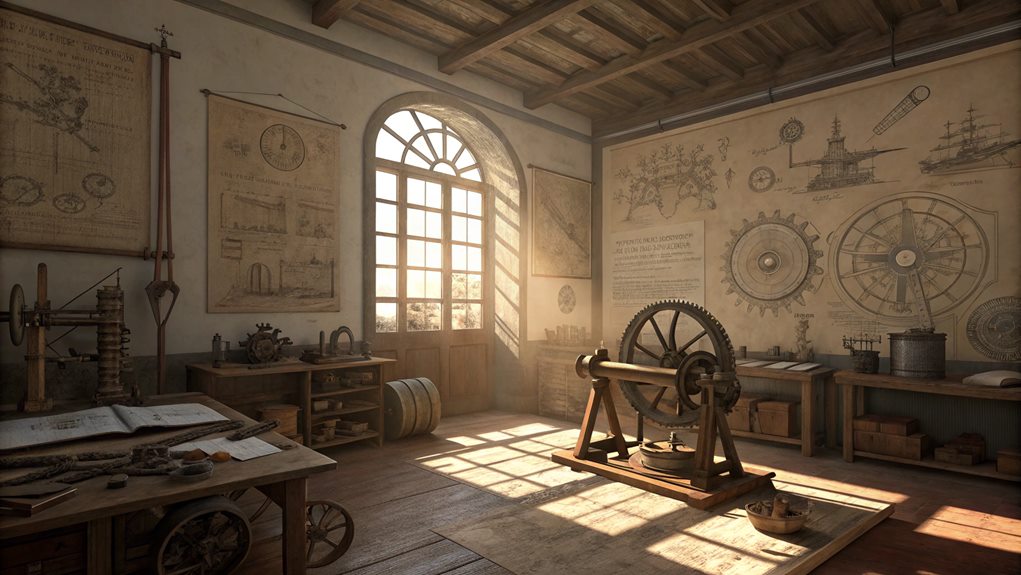
Engineering and inventions were at the heart of Leonardo Da Vinci's genius, showcasing his insatiable curiosity and forward-thinking approach. You'll find that his sketches and notes reveal a mind constantly at work, imagining machines that were far ahead of his time. For instance, he designed an early version of the helicopter, known as the "aerial screw," demonstrating his fascination with flight.
You can't overlook his contributions to military engineering, either. Leonardo conceptualized a giant crossbow and a tank-like vehicle, envisioning how these inventions could change warfare. Each design reflects his deep understanding of mechanics and physics, blending art with engineering seamlessly.
Moreover, Da Vinci's water-lifting devices and bridge designs illustrate his innovative spirit, aiming to solve practical problems. His meticulous observations of nature and human anatomy influenced not just art but also engineering principles, merging science with creativity.
When you explore Leonardo's inventions, you realize he wasn't just an artist; he was a pioneer in engineering. His visionary ideas laid the groundwork for future inventors and engineers, proving that imagination can lead to groundbreaking advancements.
Influence on Renaissance
During the Renaissance, Da Vinci's impact extended far beyond his artistic masterpieces, shaping the cultural landscape in profound ways. His innovative techniques and relentless curiosity inspired not just artists but also scientists, architects, and thinkers of his time. You can see his influence echoed in various fields, as he seamlessly blended art with science, emphasizing observation and experimentation.
Here are some key aspects of his influence:
- Artistic Techniques: Da Vinci's use of chiaroscuro and sfumato revolutionized painting, setting new standards for realism.
- Scientific Inquiry: His meticulous observations laid the groundwork for modern scientific methods, encouraging a spirit of inquiry.
- Interdisciplinary Approach: By merging art and science, he demonstrated the importance of cross-disciplinary thinking, inspiring future innovators.
- Human Anatomy: His anatomical sketches advanced the understanding of the human body, influencing both art and medicine.
- Cultural Patronage: Da Vinci's relationships with patrons like the Medici established a model for artist sponsorship that would shape the art world.
In essence, Da Vinci didn't just create; he sparked a movement that transformed Renaissance thought and practice.
Personal Philosophy
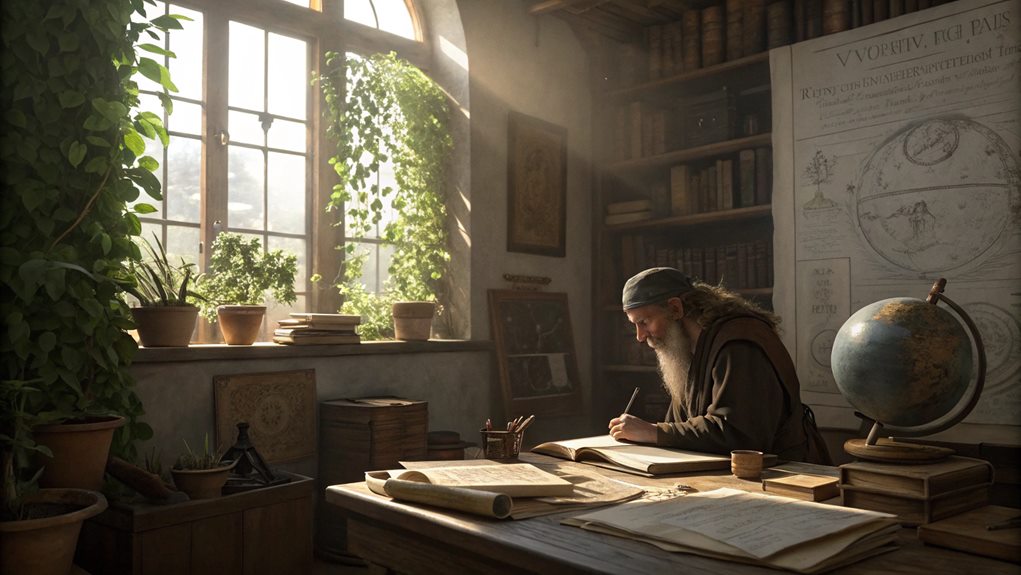
Leonardo Da Vinci's personal philosophy reflects a deep commitment to knowledge and a relentless pursuit of understanding the world around him. You can see this in his insatiable curiosity, which drove him to explore various fields such as painting, anatomy, engineering, and botany. He believed that observation was key to learning, emphasizing that true understanding comes from firsthand experience. Instead of accepting established truths, he encouraged questioning and experimentation.
You'll also find that Da Vinci valued the interconnectedness of all disciplines. He often blended art and science, demonstrating that creativity fuels innovation. His sketches of flying machines and anatomical studies reveal his belief that art and science can coexist and enhance each other.
Moreover, he advocated for lifelong learning, suggesting that one should never stop seeking knowledge. He often wrote in his notebooks about the importance of practicing skills and refining techniques. This relentless pursuit of improvement reflects his belief in the potential for personal growth.
Ultimately, Da Vinci's personal philosophy encourages you to embrace curiosity, challenge conventions, and recognize the unity of knowledge across different domains. This mindset can inspire you to explore and innovate in your own pursuits.
Legacy and Impact
Da Vinci's commitment to knowledge and exploration has left an indelible mark on various fields, shaping the course of art and science for centuries. His innovative techniques and insatiable curiosity fostered a spirit of inquiry that resonates even today. You can see his influence in multiple domains, from painting and anatomy to engineering and aerodynamics.
Here are some key aspects of his legacy:
- Artistic Techniques: Da Vinci's use of sfumato and chiaroscuro transformed the way artists approach light and shadow.
- Scientific Method: His observations laid groundwork for modern scientific inquiry, emphasizing experimentation and empirical evidence.
- Anatomical Studies: His detailed sketches of human anatomy advanced medical understanding, influencing both art and medicine.
- Engineering Innovations: Da Vinci conceptualized machines that predated modern technology, showcasing his visionary thinking.
- Cultural Impact: His masterpieces, like the Mona Lisa and The Last Supper, continue to inspire countless artists and captivate audiences worldwide.
Through these contributions, Da Vinci not only redefined artistic expression but also paved the way for future breakthroughs, proving that the pursuit of knowledge knows no bounds.
Read The Next Blog Post –
In the tapestry of history, Leonardo da Vinci's threads weave a vibrant picture of creativity and intellect. Just as the brush strokes in the "Mona Lisa" blend seamlessly, his art and science intersect, illuminating the world around us. You can see his spirit in every curious mind that dares to explore, as if each invention and artwork is a star in a vast sky, guiding you toward endless possibilities. His legacy lives on, inspiring you to create and innovate.