

You might find it intriguing that Michelangelo, often hailed as a genius of the Renaissance, viewed his art not just as a craft but as a divine calling. His masterpieces, from the Sistine Chapel to the iconic David, reveal a deep understanding of human emotion and form that still captivates us today. Yet, the question remains: how did his personal philosophy and innovative techniques shape not only his own work but also the future of art itself? This exploration could uncover layers of influence that extend far beyond his time.
Early Life and Influences
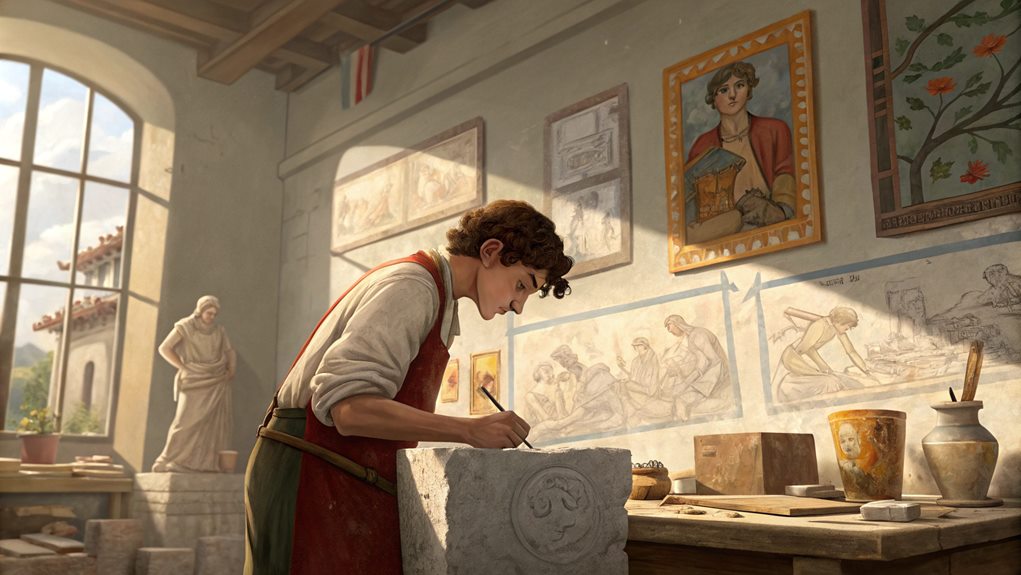
What shaped Michelangelo into one of the greatest artists of all time? Born in 1475 in Caprese, Italy, you'd find that his early life was marked by unique influences that nurtured his talent. At just six years old, he moved to Florence, a city buzzing with artistic innovation. The vibrant atmosphere sparked his creativity, and you can see how he absorbed the Renaissance ideals around him.
His father, a government official, didn't initially support his artistic ambitions, but Michelangelo's passion was undeniable. He became an apprentice at the workshop of Domenico Ghirlandaio, where you'd witness him mastering techniques like fresco painting. Working alongside established artists, he honed his skills, gaining invaluable experience. You can also see how the study of classical sculpture deeply influenced him, inspiring his later works.
Moreover, Michelangelo was greatly impacted by his relationships with patrons, including the powerful Medici family. They not only provided financial support but also introduced him to the intellectual circles of the time. These early experiences and influences laid a strong foundation for the remarkable artist you'd come to know, shaping his vision and techniques that would later redefine art.
Major Works and Achievements
Michelangelo's major works showcase his incredible talent and vision. You'll see how he transformed spaces with the Sistine Chapel ceiling, captured human beauty in the David sculpture, and left a lasting impact on architecture. Each piece reflects his mastery and dedication to the arts, making him a true icon of the Renaissance.
Sistine Chapel Ceiling
During the years from 1508 to 1512, Michelangelo transformed the Sistine Chapel ceiling into a monumental masterpiece that forever changed the course of art. As you gaze upward, you're struck by the sheer scale and complexity of his work. Each scene bursts with life and emotion, inviting you to explore biblical narratives with fresh eyes.
Imagine standing beneath this stunning creation and seeing:
- The Creation of Adam: The iconic moment when God reaches out to impart life, a powerful expression of divine connection.
- The Last Judgment: A dramatic portrayal of the final reckoning, filled with swirling figures and intense emotions that capture the urgency of salvation.
- The Sibyls and Prophets: Graceful figures who prophesy the coming of Christ, each draped in flowing robes that emphasize Michelangelo's mastery of the human form.
- The Ignudi: Athletic nudes that frame the scenes, showcasing the beauty of the human body, a reflection of Michelangelo's belief in the harmony of spirit and flesh.
Every inch of the ceiling reveals Michelangelo's genius, making you feel both humbled and inspired by the divine narratives he so brilliantly captured.
David Sculpture
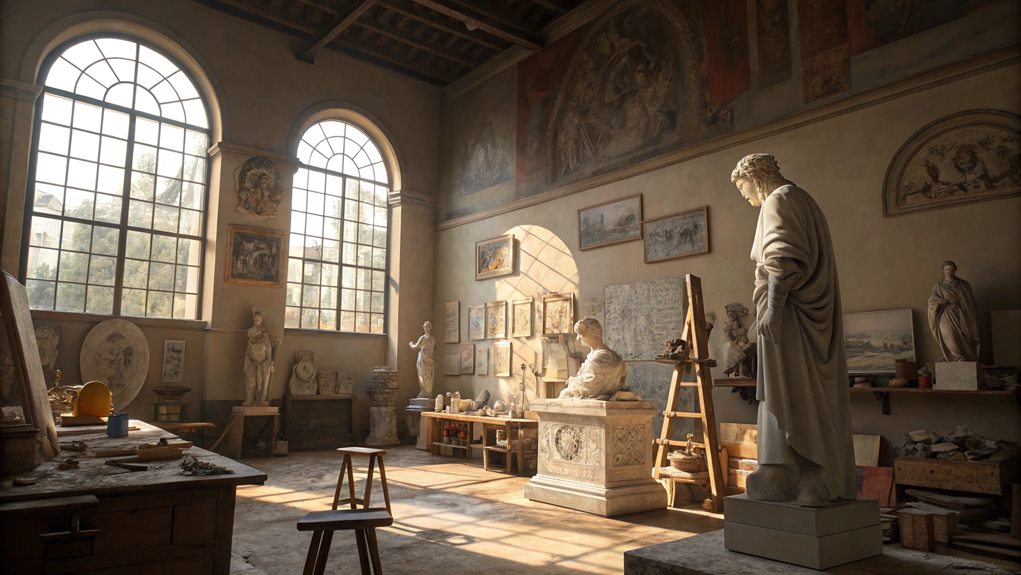
Carved from a single block of marble between 1501 and 1504, the statue of David stands as a tribute to Michelangelo's unparalleled skill and vision. This masterpiece, towering at 17 feet, embodies the ideal of Renaissance humanism. You can't help but be captivated by David's poised stance, which exudes both strength and contemplation. Michelangelo captured not just physical perfection, but also the psychological depth of his subject, showcasing David's inner turmoil before facing Goliath.
The meticulous attention to detail in David's anatomy reflects Michelangelo's profound understanding of the human form. You'll notice the veins and muscles, all rendered with remarkable precision that brings the statue to life. Originally intended for the Florence Cathedral, David instead found his home in the Palazzo della Signoria, symbolizing the city's civic pride and strength.
As you admire this iconic work, remember it's not just a representation of a biblical hero; it's a celebration of the Renaissance spirit. Michelangelo's David has influenced countless artists and remains a timeless symbol of artistic achievement, inspiring wonder in all who encounter it.
Architectural Masterpieces
Among Michelangelo's many contributions to the world of art, his architectural masterpieces stand out for their innovative design and structural beauty. You can see his genius at work in iconic structures that not only define the skyline but also showcase his remarkable vision. One of his most significant achievements is the dome of St. Peter's Basilica in Vatican City. This monumental structure, with its soaring height and intricate details, draws visitors from around the globe.
As you explore Michelangelo's architectural works, you'll notice:
- The harmonious blend of classical elements with bold, modern ideas.
- The intricate carvings and sculptures that adorn his buildings, adding depth and emotion.
- The innovative use of space, creating a sense of grandeur and intimacy.
- The dramatic interplay of light and shadow, enhancing the visual experience.
His contributions to architecture reflect not just a mastery of form, but a deep understanding of how space influences human experience. Michelangelo's architectural legacy continues to inspire architects and artists, reminding us of the powerful connection between structure and artistry.
The Sistine Chapel Masterpiece
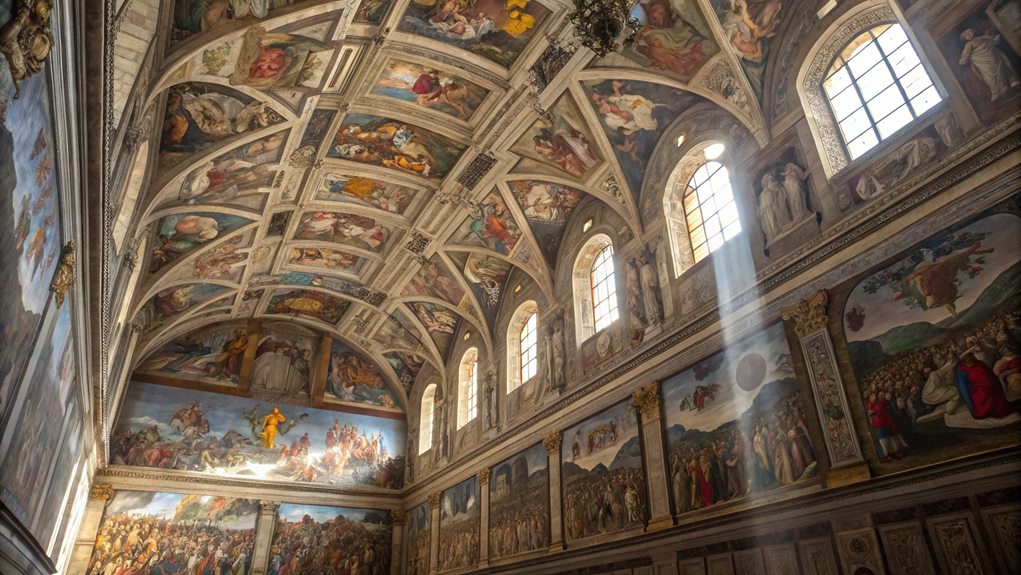
Nestled in the heart of Vatican City, the Sistine Chapel stands as a tribute to Michelangelo's genius and artistic vision. When you step inside, you're immediately struck by the breathtaking frescoes that adorn the ceilings and walls. Michelangelo took on the monumental task of painting the chapel's ceiling between 1508 and 1512, transforming it into one of the most celebrated works of art in history.
As you gaze up at the iconic scenes, like "The Creation of Adam," you can't help but feel the power and emotion captured in each brushstroke. Michelangelo's ability to convey human anatomy and expression is unparalleled, drawing you into the divine narratives depicted above. You might notice how he skillfully uses color and light to create depth and movement, making the figures appear almost alive.
The Last Judgment, painted later on the altar wall, reflects his evolving style and mastery. It's a vivid portrayal of the final judgment, filled with dynamic figures and dramatic gestures. As you contemplate these masterpieces, you realize that the Sistine Chapel isn't just a work of art; it's a profound expression of faith, creativity, and the human experience.
The Statue of David
When you stand before Michelangelo's Statue of David, you can't help but appreciate the artistic mastery and technique that went into its creation. This iconic sculpture embodies the ideals of the Renaissance, showcasing human beauty and strength. Its cultural impact and influence extend far beyond art, inspiring generations and shaping the way we view creativity today.
Artistic Mastery and Technique
Michelangelo's Statue of David stands as a pinnacle of Renaissance artistry, showcasing his extraordinary mastery of sculpting techniques. When you view this iconic piece, you can't help but be captivated by the flawless execution and attention to detail. Michelangelo approached the marble with a vision, revealing the human form in a way that feels both powerful and serene.
- The taut muscles ripple beneath the skin, capturing a moment of poised tension.
- The lifelike veins thread through David's arms, hinting at the strength within.
- His gaze, intense and determined, conveys a sense of purpose that draws you in.
- The delicate curls of hair crown his head, adding a touch of youthful elegance.
You can see how Michelangelo employed contrapposto, allowing David's weight to shift naturally, bringing life to the statue. The proportions are meticulously calculated, ensuring that every angle enhances the figure's imposing presence. By choosing a single block of marble, he transformed potential into reality, carving not just a statue but a timeless symbol of beauty and artistry. In David, you witness the pinnacle of human expression and technical prowess, forever cementing Michelangelo's legacy in art history.
Symbol of Renaissance Ideals
The Statue of David transcends mere artistry to embody the core ideals of the Renaissance. You can see how Michelangelo captured the essence of humanism through this masterpiece. David stands as a symbol of individual potential and the triumph of reason over brute force. His poised stance and intense gaze reflect a perfect blend of strength and contemplation, encouraging you to appreciate the beauty of the human form and spirit.
As you admire the intricate details, from the muscles to the facial expression, you can't help but feel the artist's deep understanding of anatomy. This knowledge was revolutionary at the time, showcasing the Renaissance belief in the importance of observation and study of the natural world. In addition, David represents the civic pride of Florence, reflecting the values of a republic that champions freedom and creativity.
When you look at David, you're not just seeing a sculpture; you're witnessing a profound statement about human potential and the importance of individuality. This iconic work invites you to reflect on the values that shaped the Renaissance, reminding you of the enduring power of art to inspire and elevate the human spirit.
Cultural Impact and Influence
David's impact extends far beyond Florence, influencing countless artists and movements across centuries. When you gaze upon this masterpiece, you can't help but feel the weight of its cultural significance. Michelangelo's David became a symbol of human potential and artistic genius, inspiring generations to explore the depths of their creativity.
Imagine witnessing:
- The gleaming marble that captures the light, highlighting every muscle and sinew, bringing David to life.
- The intense gaze of the figure, conveying determination and strength, compelling you to ponder the struggle between fear and bravery.
- The surrounding art that echoes David's form, from Baroque sculptures to modern interpretations, each paying homage to Michelangelo's vision.
- The global impact, as artists from various cultures reinterpret David, incorporating their own styles and philosophies, creating a tapestry of artistic dialogue.
As you reflect on David, you realize that this iconic statue is more than just a work of art; it's a timeless representation of human aspiration, shaping the very essence of Western art and culture. Michelangelo's creation will continue to resonate, inspiring artistic endeavors for generations to come.
Artistic Techniques and Innovations
Among the many artistic techniques employed during the Renaissance, Michelangelo's mastery of form and composition stands out. You'll notice how he skillfully manipulates the human figure, imbuing it with a sense of energy and movement. His understanding of anatomy is profound; he studied the human body meticulously, allowing him to render figures that are not just lifelike but also emotionally resonant.
In his sculptures, like the iconic David, you can see how he uses contrapposto to create a dynamic balance, making the figure appear ready to spring to life. When you look at his paintings, particularly the Sistine Chapel ceiling, you're struck by his innovative use of foreshortening, which gives depth to his work. His vibrant use of color and light also contributes to the dramatic intensity of his compositions.
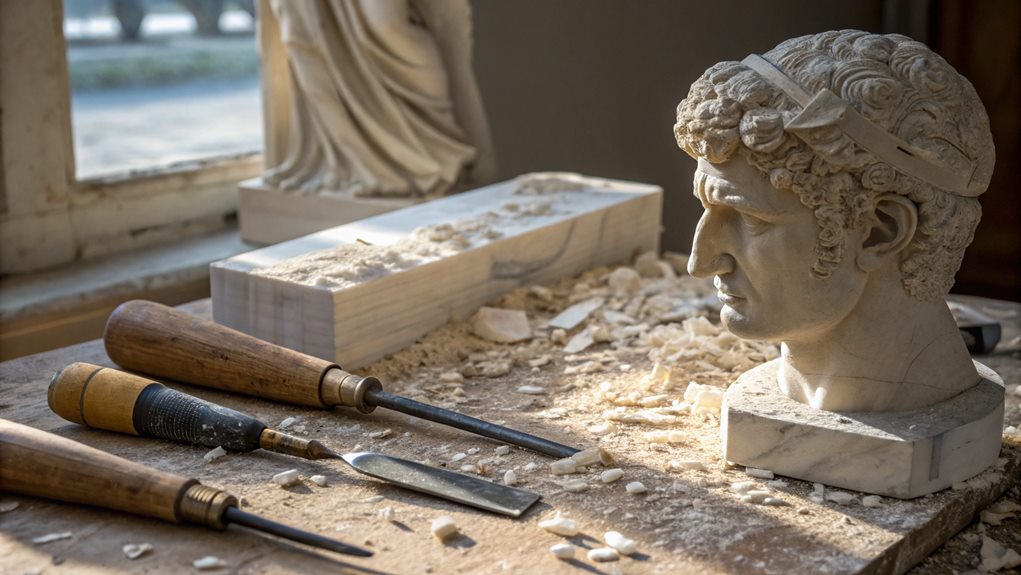
Michelangelo's techniques, including his unique approach to chiseling marble, allowed him to create surfaces that seem to breathe. Additionally, his ability to convey complex narratives through visual storytelling sets his work apart. By blending these techniques, you can appreciate how Michelangelo pushed the boundaries of artistic innovation, leaving an indelible mark on the art world.
Michelangelo's Philosophy of Art
How did Michelangelo's philosophy of art shape his creations? His belief in the divine nature of art drove him to see sculpting and painting as spiritual endeavors. You'll notice how he revered the human form, viewing it as a vessel of divine expression. Every chisel strike and brush stroke reveals his commitment to capturing the essence of humanity. Michelangelo didn't just create art; he sought to elevate it to a sacred level.
His philosophy can be seen in:
- The muscular tension of "David," symbolizing the struggle of human existence.
- The vibrant colors of the Sistine Chapel, evoking the heavenly and the earthly domains in harmony.
- The raw emotion in the faces of his sculptures, reflecting the depth of human experience.
- The interplay of light and shadow, creating a sense of movement and life in his paintings.
Impact on Future Generations
Michelangelo's profound philosophy of art not only shaped his own masterpieces but also laid a foundation that influenced countless artists for generations to come. When you look at the works of the Renaissance, you can't help but notice the techniques and ideas that echo Michelangelo's genius. His emphasis on human anatomy, movement, and emotion transformed how artists approached their craft, pushing them to investigate the depths of human experience.
As you explore the world of art, you'll see how artists like Caravaggio and Raphael drew inspiration from his innovative use of light and shadow. Even modern artists often cite Michelangelo as a pivotal influence in their own creative journeys. You'll find that his ability to blend technical skill with emotional depth continues to resonate today.
Moreover, Michelangelo's commitment to perfection and his relentless pursuit of beauty challenge you to elevate your own artistic endeavors. His works remind you that art is not just about aesthetics; it's about conveying profound truths and connecting with the viewer. In this way, Michelangelo's legacy lives on, inspiring you to push boundaries and explore new dimensions in your own artistic expression.
Legacy in Modern Culture
Across various aspects of modern culture, Michelangelo's influence shines through, shaping everything from visual arts to popular media. You might not realize it, but when you see grand sculptures or powerful performances, Michelangelo's spirit is often present. His mastery of form and emotion continues to inspire artists and creators today.
- Epic films that capture the intensity of human struggle often draw on Michelangelo's dramatic compositions.
- Graffiti murals in urban landscapes echo the boldness and passion found in his work, blending classical techniques with contemporary messages.
- Fashion designs that emphasize sculptural shapes can trace their lineage back to the fluidity and dynamism of Michelangelo's figures.
- Video games featuring character designs that prioritize anatomical accuracy often reflect the Renaissance artist's meticulous attention to the human body.
As you engage with these cultural expressions, you can see how Michelangelo's legacy transcends time. Whether it's through a breathtaking painting or a powerful narrative, his artistry continues to resonate, reminding you of the beauty and complexity of human experience.
Read The Next Blog Post –
Michelangelo's art is like a timeless river, flowing through the ages, shaping the landscape of creativity. His masterpieces invite you to explore the depths of human emotion and divine inspiration. As you reflect on his legacy, you can see how his influence permeates modern culture, from the fashion you wear to the films you watch. Michelangelo's passion and innovation continue to ignite your imagination, reminding you of the enduring power of art to connect us all.